Mexico, 1993
Review:JA Kerswell
More south-of-the-border terrornovela with director Fernando Durán Rojas’s bonkers mix of soap-opera histrionics and slasher chaos. A man confined to his wheelchair by the actions of his insane wife watches helplessly as a figure in black robes and a translucent mask bloodily kills with an axe, a pitchfork, and a butcher’s knife anyone who crosses his spouse. Despite having one of the most obvious killer reveals in slasher movie history, THE REVENGE OF THE WHEELCHAIR delivers some spicy, overblown melodrama and some effectively splashy gore gags.
Dr Fernando (Fernando Almada) is a wealthy paediatrician married to a glamorous yet troubled movie star, Sara (Claudia Islas). Sara has retired from acting due to undisclosed mental health issues, but appears to now be happy and is pregnant with Fernando’s baby. The couple also have a young daughter, Nancy, from one of Sara’s previous relationships, but Fernando finds it difficult to connect with the little girl. Against her husband’s wishes, Sara refuses to continue psychiatric treatment, but her shrink reassures Fernando that his wife won’t go nuts again as long as she doesn’t experience any shocks. Mere moments later, Fernando accidentally reverses over young Nancy with his car and kills her. Certainly a disastrous career move for a paediatrician and devastating for his wife’s mental health. Sara cannot accept her daughter’s death, telling herself that Nancy will return soon. She refuses treatment from her husband and insists that the birth of their baby be monitored by Dr Fanny (Clarissa Ahuet), resulting in the birth of a boy named David.
Fast-forward five years, and Sara has still not forgiven Fernando for flattening her daughter on the family’s driveway, but they remain together. However, when Fernando is away from home, she dresses her son in frilly bonnets and dresses and makes him play with dolls. Sara tells the servants that she does not have a son and that David is her daughter. Her maid, Martina (Susan Contreras), tells the butler, Pedro (Ventura Aguilar), that she is concerned Sara is having another breakdown. Later, someone in black robes and a translucent mask cuts Martina’s throat and disposes of her body. When Fernando returns unexpectedly after car trouble, he finds his son dressed as a girl and confronts Sara. He says he will discuss this later, as he has to travel to see his ailing mother, but Sara tampers with his car’s brakes, causing him to crash en route and suffer catastrophic injuries that leave him crippled in a wheelchair and unable to speak.
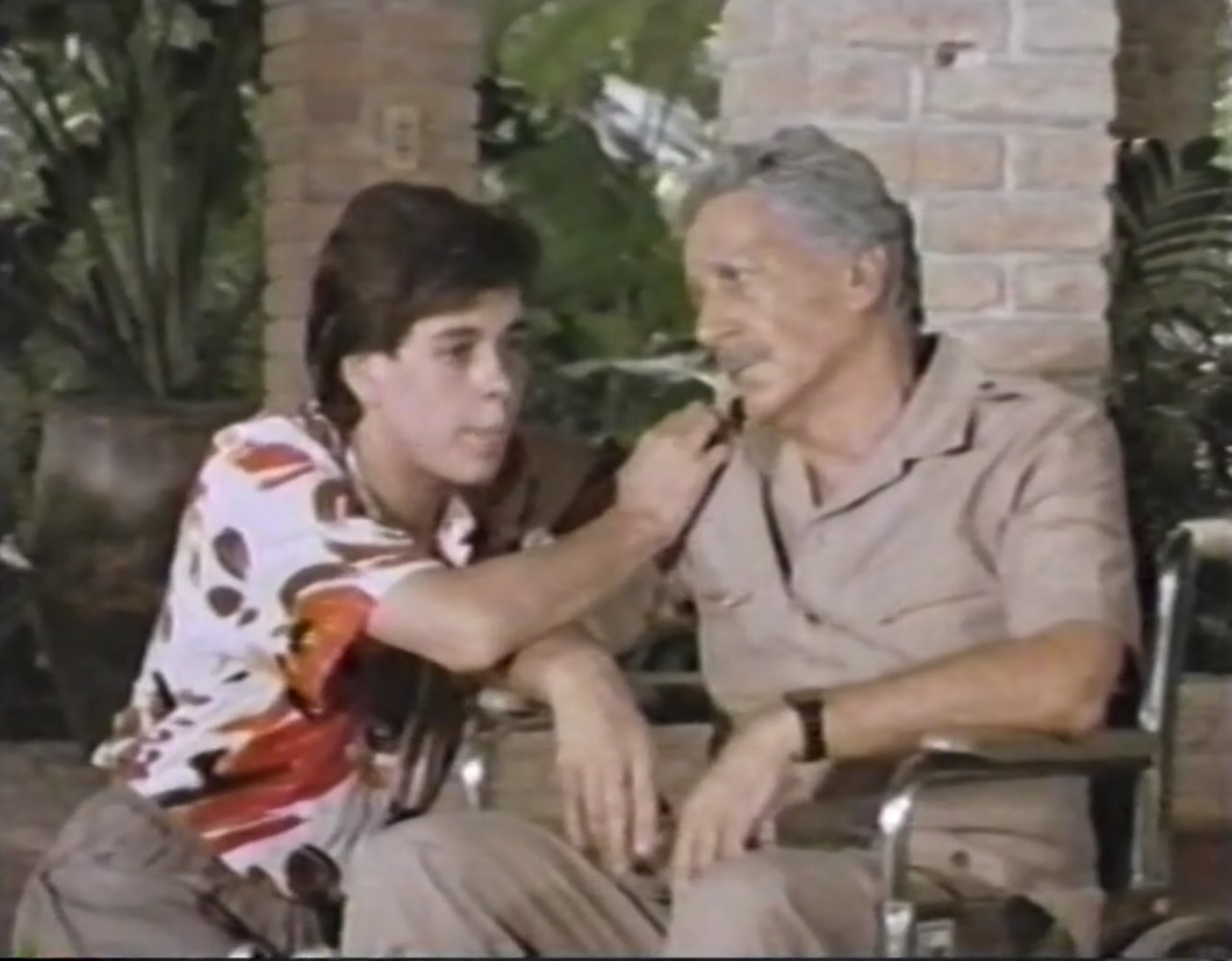
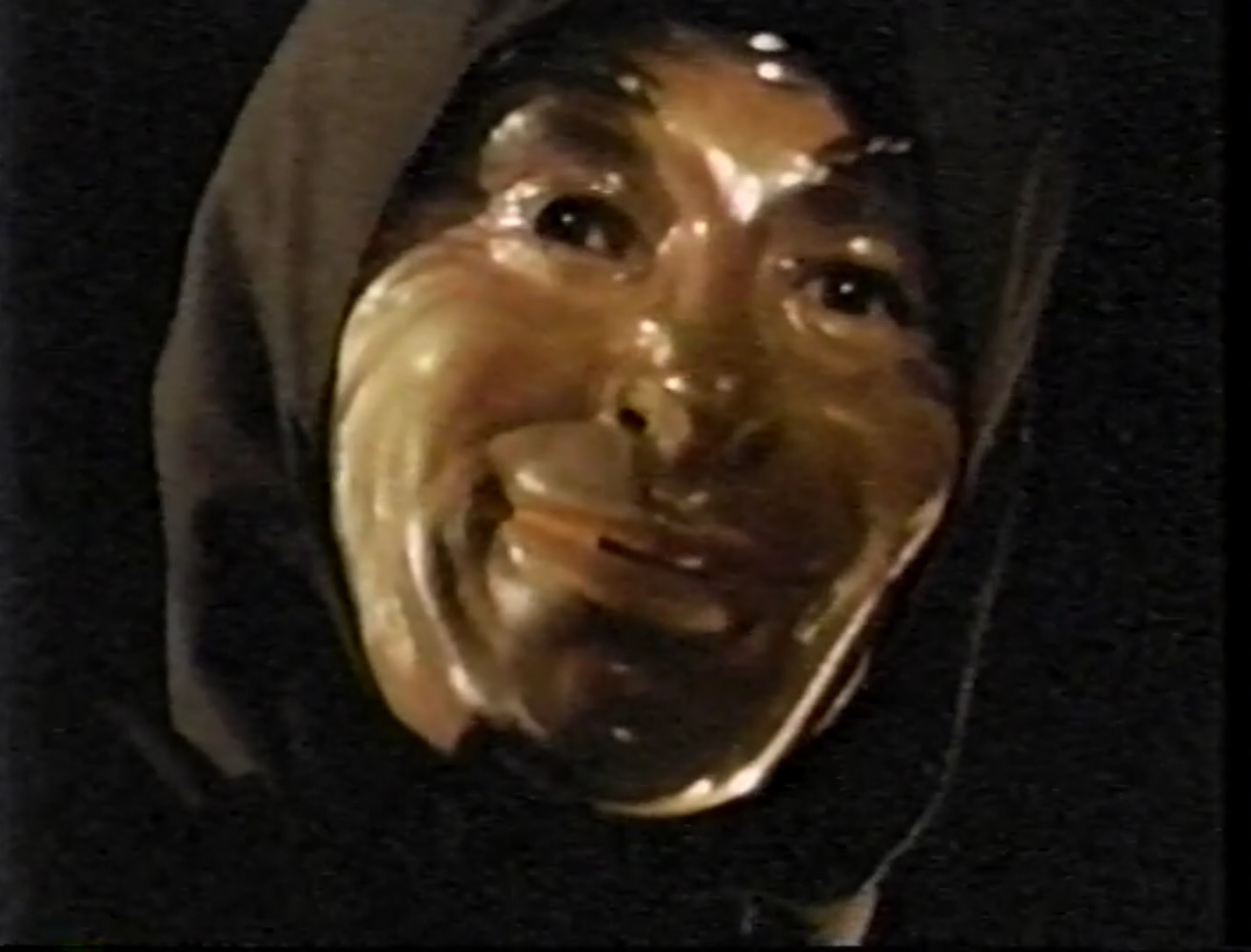

Fast-forward another twelve years, and David (Rodrigo Vidal) is now seventeen, still residing with his parents in their seaside mansion. Sometimes he is calm and kind, criticising his mother for how she treats his invalid father, while at other times, he erupts into rages. The long-suffering Pedro remains part of the household, and his true crime-loving godson Jose (Ruben Recio) comes to stay. Jose is taken aback by David’s unpredictable behaviour, especially his insistence that his half-sister Nancy is still alive. Meanwhile, someone cloaked in black robes and a translucent mask is murdering local teenagers and various staff members at the mansion. Who is behind the mask, and will that wheelchair get its revenge?
As with many Mexican slasher movies from this era, your enjoyment (or lack thereof) of high camp melodrama might colour your viewing experience. Characters swing from friendly cheerfulness to nostril-flaring freakouts in the blink of an eye. Personally, I adore the over-the-top acting style that, while it teeters close to the ludicrous, is delivered with such exaggerated sincerity that it’s hard not to get swept up in its cod intensity. That said, Fernando Almada brings a touch of pathos as the wheelchair-bound patriarch. And, former beauty queen Claudia Islas goes full throttle as the crazy mother and doesn’t shy away from appearing dowdy and haunted. However, the killer’s identity is so glaringly obvious that you think there must be a twist until the very last moment, but there isn’t! Clearly, the suggestion that cross-dressing might lead to violent insanity is highly reductive, but it isn’t an aspect that’s really developed enough to make any kind of impact. The film is kept lively by a fairly graphic murder scene every 15 minutes or so, to hold the audience’s attention.
Director Fernando Durán Rojas was undoubtedly prolific. The same year this was released, he produced a fictionalised account of the Branch Davidian siege, TRAGEDIA EN WACO, TEXAS. He also directed the earlier slasher ASESINO NOCTURNO (1988). THE REVENGE OF THE WHEELCHAIR was shot on film and seemingly edited on video. Originally released as LAPRÓXIMA VICTIMA (THE NEXT VICTIM), it was retitled to capitalise on the popular SILLA DE RUEDAS action series, which starred Fernando Almada’s brother Mario (but otherwise has no connection). Fernando was also best known for his action and western-style films, often alongside his sibling. The irony is that he spends most of this film mute and in a wheelchair. The actor also appeared in previous Mexican slashers DEATH OF THE JACKAL (1984), its sequel MASSACRE EN RIO GRANDE (1988), and GRAVE ROBBERS (1990). Claudia Islas—often referred to as the Mexican Brigitte Bardot—frequently appeared in Mexican horror films; unsurprisingly, she later moved on to villainous and glamorous roles in telenovelas and was starring in the soap CORAZÓN SALVAJE (1993-1994) at the time of this release.
THE REVENGE OF THE WHEELCHAIR clocks in at a brief 68 minutes. It’s so short that an abridged version of the film is included at the end to extend the duration! Despite its eye-catching title, it’s certainly not the best or most lively Mexican slasher, but it contains enough wild moments and flashes of gore to make it worth a watch.
BODY COUNT 8:
Female 6 / Male 2



Thank you for reading! And, if you've enjoyed this review, please consider a donation to help keep Hysteria Lives! alive! Donate now with Paypal.