Italy, 1966
Review: JA Kerswell
A killer in black robes stalks a sanatorium, killing the most attractive female patients with a cutthroat razor, in this blending of Italian Gothic Horror with Mario Bava’s trailblazing BLOOD AND BLACK LACE (1964). THE MURDER CLINIC remains a riotously ripe, if a little creaky, slice of Italian thriller melodrama and a fascinating example of how the Giallo evolved in the second half of the 1960s. However, its period setting and tamer psychosexual violence (even compared to Bava’s earlier film) might blunt its impact for those more attuned to the wave of Gialli that followed Dario Argento’s international breakout hit THE BIRD WITH THE CRYSTAL PLUMAGE (1970).
Morely, 1870: A nurse, Mary (Barbara Wilson), arrives at a remote mental hospital to replace another attractive young medic (who, the opening sequence suggests, has been slain by the razor-wielding killer). The facility is run by the stern Dr Vance (William Berger) and his even sterner wife, Lizabeth (Mary Young). Mary is introduced to the patients at the opulent facility, including a handsome man, Fred (Massimo Righi), who is mostly calm but prone to violent outbursts, and an old lady who delights in showing off her taxidermied cat. If a stuffed pussy wasn’t alarming enough, Mary is disturbed by noises from the attic. She is further puzzled when her favourite patient, the mute Janey (Anna Maria Polani)—to whom she reads stories about royal beheadings at bedtime—has vanished one morning. Dr Vance says that Janey was collected by her family early in the morning, but the killer actually attacked her in her bedroom the night before, causing her to flee across the grounds rather than seek help closer by. She was killed after she inexplicably stopped by a fountain to take a drink.
Coincidentally, a beautiful young woman, Giséle (Françoise Prévost), is being transported in a horse-drawn carriage against her will to the coast by a man (whose relationship to her is never made clear). However, when the carriage develops problems, she knocks her companion unconscious, causing the horse to bolt and drag him behind them, resulting in his accidental death. Seeking help, Giséle stumbles across Dr Vance burying the body of Janey in the woods. She feigns fainting, and the doctor finds her and invites her back to rest at the sanatorium. She, too, is soon intrigued by the sounds coming from the attic and finds a horribly disfigured woman lurking there. When Dr Vance discovers that she has been snooping, he tells her she has to leave. However, Giséle attempts to blackmail him, saying she saw him concealing a body in the woods. Soon, the killer in the black robes is stalking the halls once again, a cutthroat razor in hand …
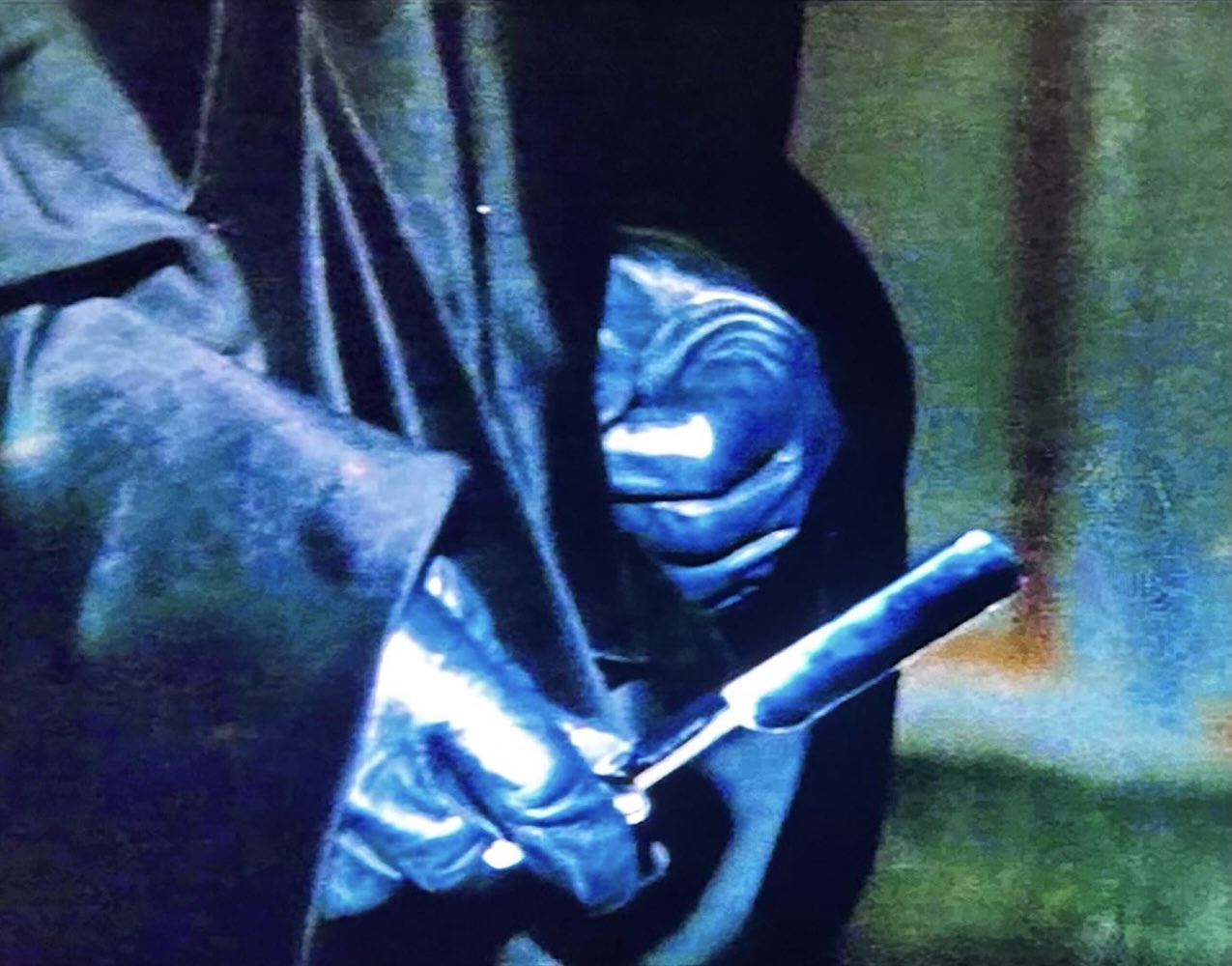
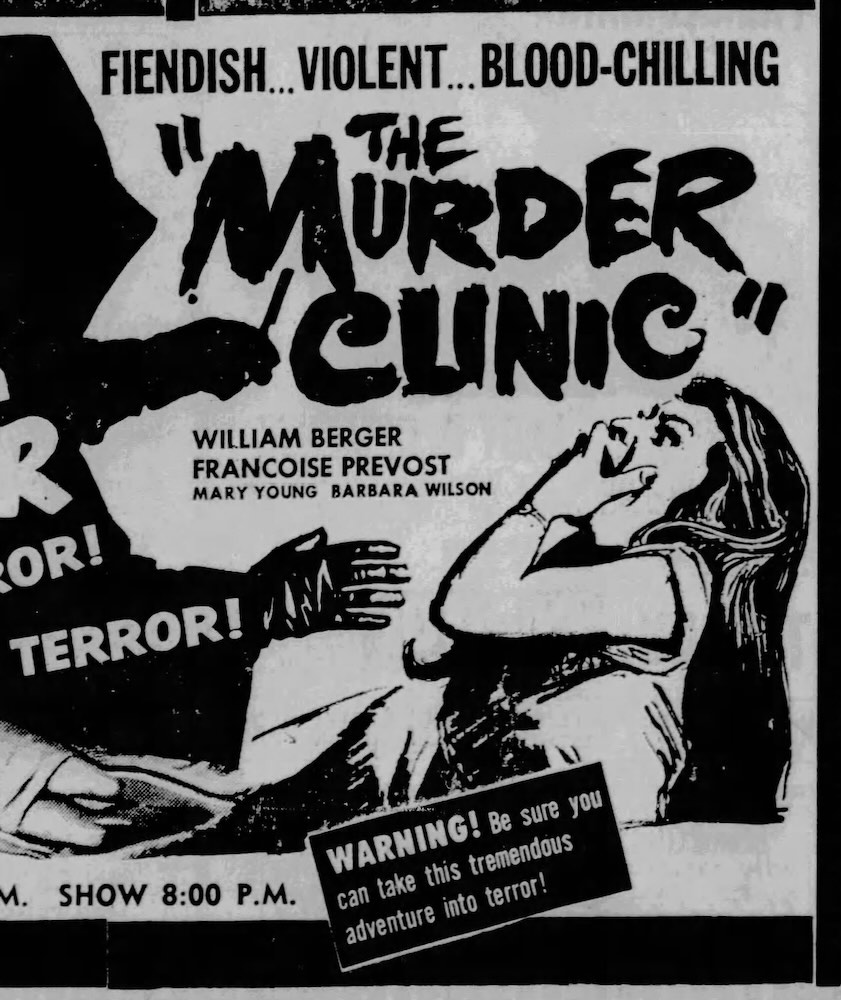
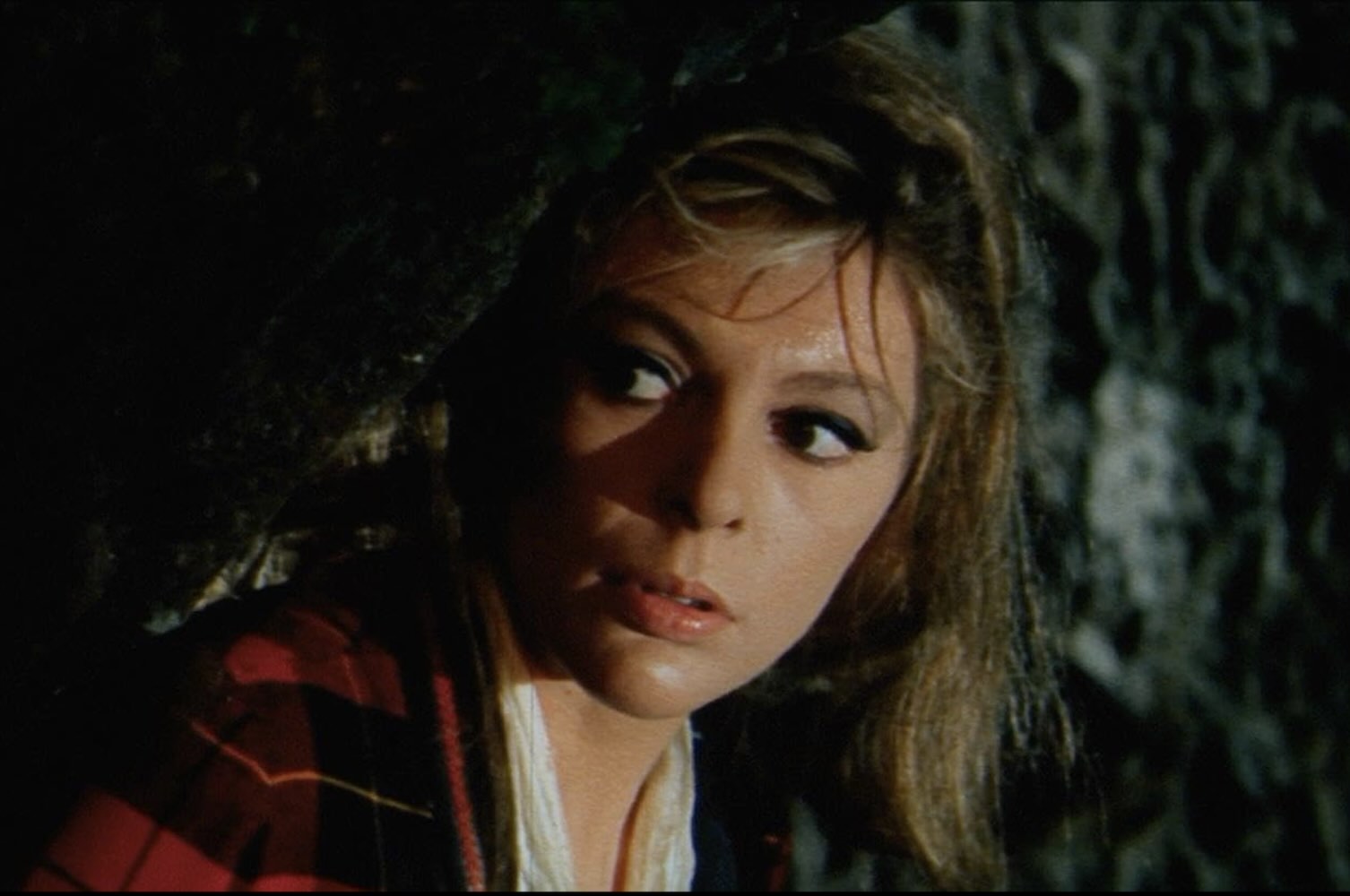
THE MURDER CLINIC features many of the trappings that would soon become a mainstay of the Giallo, but its depictions of sex and violence are comparatively chaste compared to what would come even just a few years later. Despite the breathless publicity calling this a “Bloodletter!”, whilst it may have been shocking to audiences at the time, the only blood on display is a few trickles of the red stuff making their way down a naked arm. That’s not to say there isn’t a lot of fun to be had for fans of Italian thrillers (and I expect you are if you’re reading this). The film’s lurid Technicolour makes events literally pop off the screen compared to the moody monochrome Italian Gothic Horrors. Despite its narrative approach emulating Bava’s trend-setting murder mystery, its period styling and Gothic tropes (the presence hidden in the attic being just one) show it is something of a stepping stone between the two waves of genre film. The killer, with their black leather gloves and cut-throat razor, certainly pre-empts later Gialli; although the archly theatrical way they act in the shadows is perhaps more reminiscent of a villain in a silent movie. As creaky as it may be, the script, co-written by the future prolific Giallo scribe Ernesto Gastaldi (who had also written the earlier formative Giallo LIBIDO (1965)), keeps the audience guessing who is behind the murders, successfully subverting expectations with a series of red herrings. The film’s director, Lionello de Felice, mysteriously abandoned the film near the end of production, and it was completed by producer Elio Scardamaglia.
French actress Françoise Prévost is especially good in a nuanced role as a duplicitous woman who wanders into this mélée of madness and seeks to exploit it for her own ends. North American actress Harriet Medin, who portrays the ice-cold matron, also appeared in Bava’s BLOOD AND BLACK LACE. William Berger was another well-known face in Eurohorror—he went on to appear in Bava’s FIVE DOLLS FOR AN AUGUST MOON (1970) and MY DEAR KILLER (1972). Life tragically imitated art in 1970, when the actor was arrested in a drug bust at his villa (for a tiny bit of hashish) and ended up in hospital for the criminally insane simply because of the charges. His wife was also arrested and died in custody from complications of acute peritonitis. On his release in 1971, THE MURDER CLINIC was re-released in Italy to capitalise on the scandal, with the tasteless new tagline: “William Berger, guilty or innocent?”.
Although set in rural Norfolk, England, THE MURDER CLINIC employs all the careful consideration known to Italian genre cinema in convincing the audience of its location—in other words, none at all! The setting couldn’t look less like the South East of England and looks every inch like the countryside outside Rome (which, of course, it is). Villa Parisi—where most of the interiors were shot, was also used by other Italian genre films, including BLOOD FOR DRACULA (1974) and Andrea Bianchi’s BURIAL GROUND (1980)—is wonderfully eccentric and baroque. Whilst it provides luxurious surroundings for patients, nothing like it would ever have been seen in Norfolk. It is often incorrectly listed as the location for Fernando Di Leo’s super-sleazy SLAUGHTER HOTEL (1971) (which shares a similar plot), but that film was actually shot at Castello Chigi in Castel Fusano, also outside Rome. Lastly, whilst the costuming at least reflects period detail, many of the female characters still wear heavy 1960s eye make-up and mascara, which was typical of the time and lends it a sense of campy fun.
THE MURDER CLINIC was released in Italy in the spring of 1966 under its original title, LA LAMA NEL CORPO (which translates to the very Giallo-sounding THE BLADE IN THE BODY). It was released on Canadian screens under its better-known English title in late 1968, with the promise that it was “FIENDISH … VIOLENT … BLOOD-CHILLING”. It was released in Britain in 1969, with the Manchester Evening News calling it “predictable”, though admitting that “ … no film could try harder to frighten, with some success, too”. The North Wales Weekly News said that the film featured a “preposterous series of crimes” (neatly prefiguring what the Giallo would soon be known for). The film received a belated Stateside cinema release in 1970 (albeit seemingly ignored by critics), mostly at drive-ins, and was often paired on double bills with Mario Bava’s KILL, BABY, KILL (also 1966). Its North American release was promoted with suitably lurid taglines such as “The thing is subhuman and on the loose!” Interestingly, a variation—“The thing is subhuman, and it has a knife!”—was co-opted by the promotion for the later slasher movie THE PREY (1983), with its tagline: “It’s not human, and it’s got an axe!”. It was re-released in the States in 1973 under the nonsensical title REVENGE OF THE LIVING DEAD; presumably to trick audiences into thinking it was a zombie movie.
Despite its rather archaic feel, THE MURDER CLINIC still has enough black-gloved insanity to be an interesting watch for anyone interested in the evolution of the Giallo and slasher cinema in general.
BODY COUNT 7:
Female 5 / Male 2
THE MURDER CLINIC (1966) Trailer