


Italy, 1976
Review: JA Kerswell
Paolo Cavara’s bawdy, irreverent follow-up to his earlier Giallo BLACK BELLY OF THE TARANTULA (1971). Someone is killing members of an exclusive bourgeois sex club around the anniversary of the death of one of their guests, leaving a page from a book of fairy tales next to each body. The police are struggling to get a handle on the killer.
PLOT OF FEAR opens as it means to go on, with the murder of a rotund man, Mattia (Guidarino Guidi) (wearing a kaftan that even Demis Roussos might baulk at), who is strangled to death by a matronly sex worker, Elvira (Eleonora Vivaldi), whom he has hired for the evening for a spot of sadomasochism. Later that night, in a seemingly unconnected incident, a woman, Laura (Greta Vayan), is beaten to death with a wrench on a deserted bus by another, this time, an unidentified assailant.
The murders soon spark interest from the police, with Inspector Lomenzo (Michele Placido) put in charge of investigating. He interviews a number of hookers at the station to see if any of them might provide a clue to the murderer after ascertaining that Mattia frequently solicited the services of sex workers—one of whom blows him off, saying she doesn’t know anything as she’s a “… lesbian specialist” However, he soon uncovers that the two victims were linked, as they had previously been members of the exclusive Fauna Club; on the surface, a group of people interested in wildlife conservation, but actually a front for swingers who met at Villa Hoffman to watch erotic cartoons and have dinner, and then sex (amongst other illicit activities). He also discovers that one of the guests had died mysteriously four years previously at one of these sex parties, but all the files pertaining to the death have vanished from the archives.
Lomenzo is forced to go to the modern offices of the head of a private investigation and personal protection business, Struwwel (a J&B swigging Elia Wallach), who has the latest surveillance equipment and more information on file than the cash-strapped police. After his macrobiotic cooking, model girlfriend Ruth (Mary Ruth League) skips town with another man. Lomenzo sets his eyes on her friend, the beautiful bisexual model Jeanne (Corrine Cléry), who lives upstairs. In quite some coincidence, Jeanne was a guest at Villa Hoffman the night the young woman, Rosa (Sarah Crespi), died; she takes Lomenzo there to look around the now abandoned mansion and tells him her version of what happened that night. She says it was a party held by a man named Hoffman (John Steiner), but she had no idea what kind of things went on there (including watching erotic cartoons on a sofa whilst cuddling a chimp in knitwear!); saying she only went the one time. Jeanne recalls that the sex worker died of fright when a trick was played on her after she thought she was going to be thrown into a cage with a live tiger.
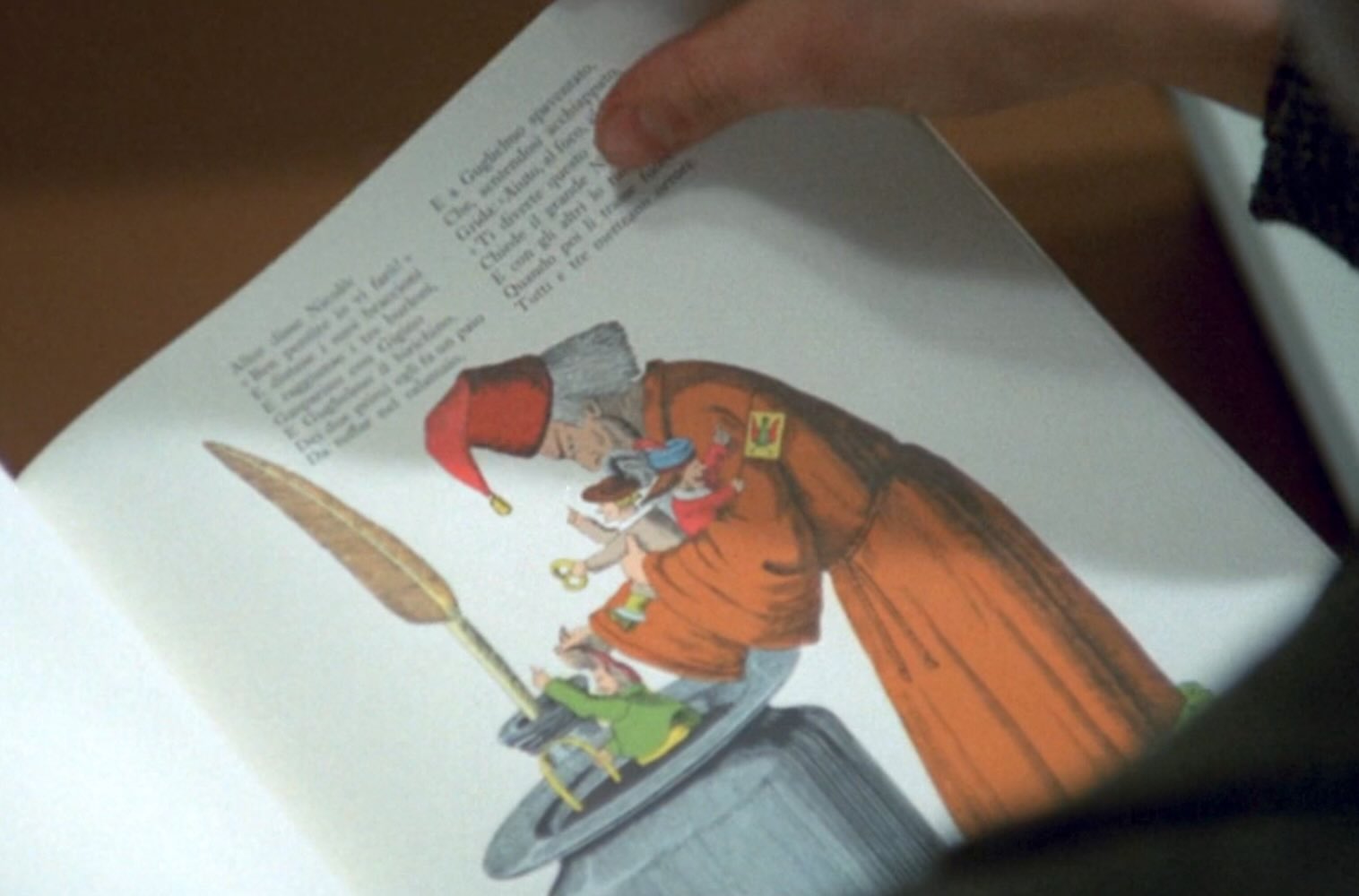
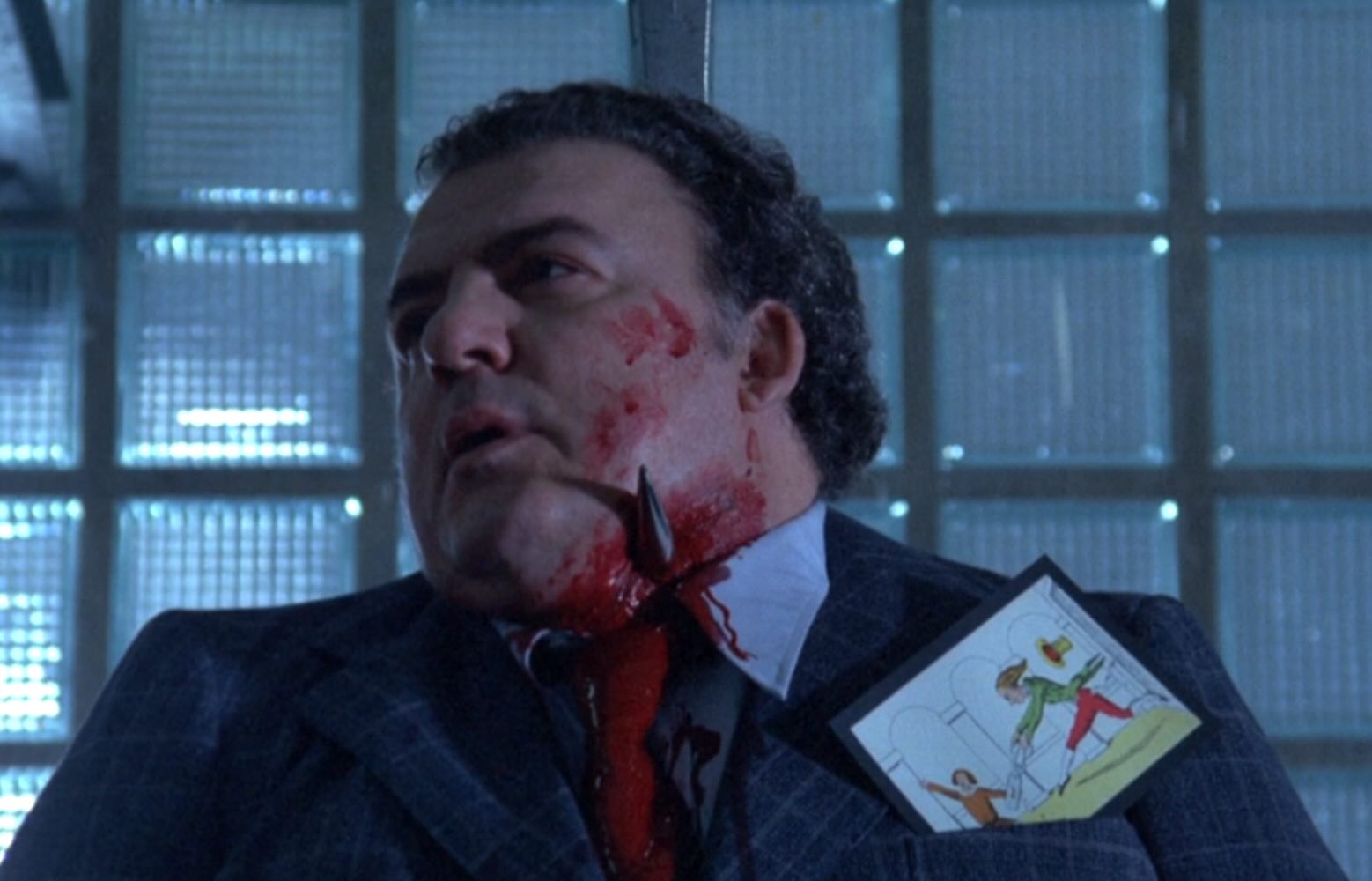
More murders occur that mirror the illustrations on the pages of the children’s book that is left at the scene of each crime. After the sex worker who strangled the first victim is set fire to in a park and another of the members of the erstwhile Fauna Club is shot dead live on TV during an interview, Lomenzo realises that what is soon dubbed The Fairy Tale Killer shows no signs of slowing down …
Cavara denied intentional similarities to the films of Dario Argento when his 1971 Giallo BLACK BELLY OF THE TARANTULA was released (hot on the heels of Argento’s THE BIRD WITH CRYSTAL PLUMAGE (1970) and CAT O’ NINE TAILS (1971)—even going as far as to say he had not seen Argento’s films. Even if that were true, the script for that film was clearly inspired by the huge box office success of Argento’s debut (both home and abroad). Cavara’s 1971 Giallo is still one of the best of the Argento ‘imitators’—unwittingly, or not. However, whilst that film largely followed the template of the black-gloved killer (albeit in that case sporting yellow surgical gloves instead), bumping off the rich and beautiful one by one in the popular tradition, PLOT OF FEAR is a markedly different proposition. The mystery element is still there (and perhaps a little too convoluted for its own good), as is the series of murders by a mysterious assassin, but it is striking how much the Giallo had changed in five short years.
After the Giallo peak of 1972, or so, the genre had diversified, often shifting to more explicit erotica or graphic violence. That isn’t necessarily the case with PLOT OF FEAR, but the whole thing feels much more bawdy, frenetic, chaotic—and even, at times, in your face vulgar. Whilst not especially explicit, the theme of rich people exploiting others for their pleasure was one that seemed to touch a nerve in Italy in the mid-1970s (see Pier Paolo Pasolini’s SALÒ, OR THE 120 DAYS OF SODOM (1975)). However, Cavara—who co-wrote the script with DEEP RED (1975) scribe Bernardino Zapponi (another Argento connection)—fills the film with amusing vignettes and characters that appear to be grotesque caricatures (even the sex workers are dressed in ludicrously exaggerated ways, which is really saying something for a ‘70s Giallo). This notably includes the foul-mouthed, elderly, bedridden mother of one of the people who attended the club, who calls her son an “asshole” every chance she gets; who initially dotes on her, but abandons her once the heat is on. To his mother’s nurse, who finishes her shift and then strips off for a spot of masturbation in the bathroom apropos of nothing, before excusing herself to get a bus home. At times, the film seems to be almost overtly satirical (there were out-and-out Giallo spoofs around the time, and it is perhaps slyly spoofing Pasolini’s film, too), but Cavara knows how to hold our attention and keep the mystery unfurling. The film’s oddball feel also comes from the chilly, atmospheric hues and foggy woods, so untypical of what might be expected of an Italian thriller. There are also a couple of very well-staged action sequences (that dip into the poliziestici genre for good measure).
However, unlike Argento’s DEEP RED (which maintains the director’s dedication to the amateur sleuth), PLOT OF FEAR again very much centres around Inspector Lomenzo and the police investigation. Thankfully, Michele Placido is excellent as the hot-headed, devilishly handsome policeman (who only dates models and prefers to simply eat spaghetti with a squeeze of condensed tomato puree); his deadpan reaction to some of the more colourful characters and situations only makes them funnier. Placido also has great chemistry with Corrine Cléry (still making headlines off the then scandalous STORY OF O (1975)), as the beautiful model who lives upstairs—although the seeming coincidence that she is caught up in the very case he’s investigating stretches credulity to the point that it perhaps does suggest that this was, in part, indeed intended as a pastiche of the Giallo. Something only strengthened by the multiple twists and outrageous turns the plot takes as it reaches its climax—which is, of course, all part of the fun.
An added mystery is why, in addition to Wallach, another North American actor, Tom Skerritt, appears during his brief mid-‘70s Euro sojourn as Lomenzo’s boss, the Chief Inspector. He is barely in a couple of scenes.
Shot in a chilly-looking Milan (with some locations in Rome) in late 1975 and released to Italian screens in 1976, unlike Cavara’s earlier Giallo, PLOT OF FEAR was perhaps too oddball for an international audience and was not picked up for a cinema distribution in the United Kingdom or the United States. However, for those with a taste for something a little different, it is definitely worthy of your time, and it is a shame that the director didn’t return to the genre for a third go-around.
BODY COUNT 9:
Female 3 / Male 6
PLOT OF FEAR (1976) (Trailer)
Thank you for reading! And, if you've enjoyed this review, please consider a donation to help keep Hysteria Lives! alive! Tip me via Ko-Fi. (and get advance access to reviews and other exclusives!)