Mexico, 1984/1985
Review:JA Kerswell
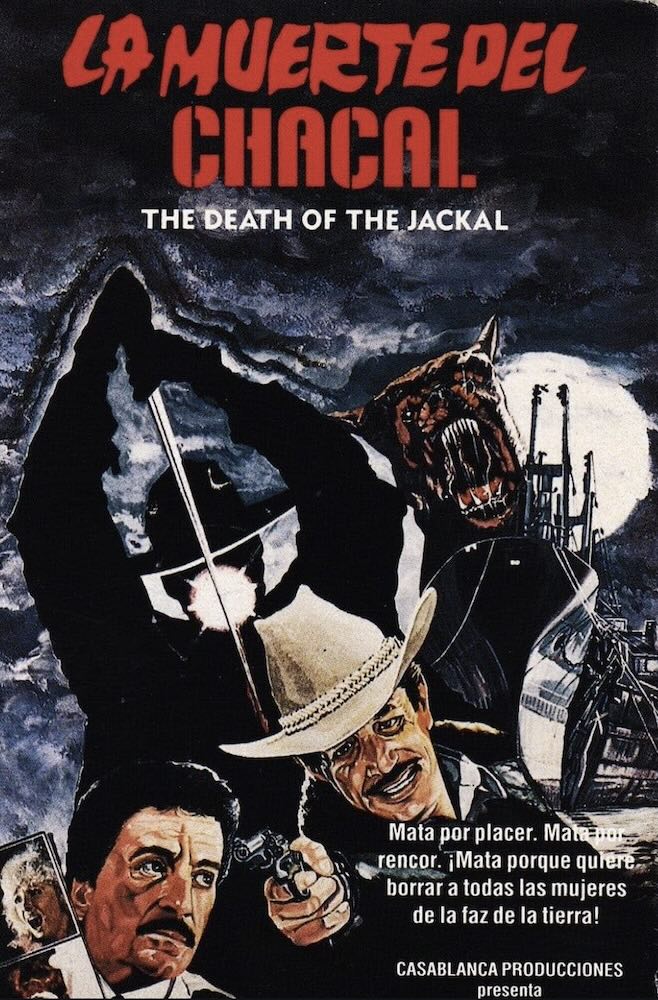
A direct sequel to THE DEATH OF THE JACKAL, with the killer returning after faking his death to continue his bloody rampage in a small port town in Texas. This Mexican slasher doesn’t quite reach the heights of its predecessor, but it does feature an extended bodypopping dance-off scene, a boozy matriarch, fashion model chaos, and yet another body hitting the dance floor of a strip club. And don’t be fooled by the often-quoted 1988 release date; this is early ‘80s all the way.
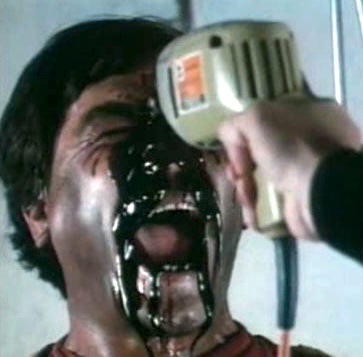
The action picks up immediately after the end of the first film, recapping the events that seemingly led the insane serial killer Roy (Fernando Almada) to a watery grave after his fight with his brother, Sheriff Bob (Mario Almada), aboard his brother’s boaty lair. However, despite being shot in the shoulder, Roy is rescued from the sea by a pair of kind-hearted sailors on a boat called the Laguna Queen, who find him unconscious but clutching a buoy. Yet, with little gratitude, his eyes suddenly snap open in true slasher movie villain style, and he drives a power drill through the head of one sailor and shoots the other, throwing him into the blades of the boat to destroy his face. His plan to fake his own death succeeds, even fooling his brother when he identifies the corpse after it washes ashore; convinced Roy is dead, they bury him in a cemetery.
Bob goes to find his mother, Nelly (Emilia Guiú), a brassy blonde barfly with a knack for putdowns. She says she doesn’t believe that her other son is dead and claims she knows because he just visited her at the bar. Worried about her heavy drinking, he insists she move in with him and his wife, Joan (Cristina Molina) (who still looks like she went to the Tammy Faye Baker school of makeup), and dismisses her insistence that Roy is still among the living as the ravings of a dedicated Tequila tippler. Even when his wife insists she saw Roy appear at a window at their house, and despite a spate of killings very similar to The Jackal, Bob insists that his brother is truly dead and it is the work of a copycat.
After befriending a couple of tramps and their dog (another Doberman) on the beach—and swapping his Giallo threads for military garb (probably after catching a showing of THE PROWLER (1981))—Roy is back up to his old tricks, visiting motels and strip clubs to kill at random. Luckily for him, the police didn’t confiscate his stash of axes and swords. All his Christmases seem to come at once when he returns to his trusty, rusty boat (now covered in cobwebs despite it being only weeks since he last left it) and discovers that a fashion photographer is using it as a set for a photoshoot with a trio of busty models …
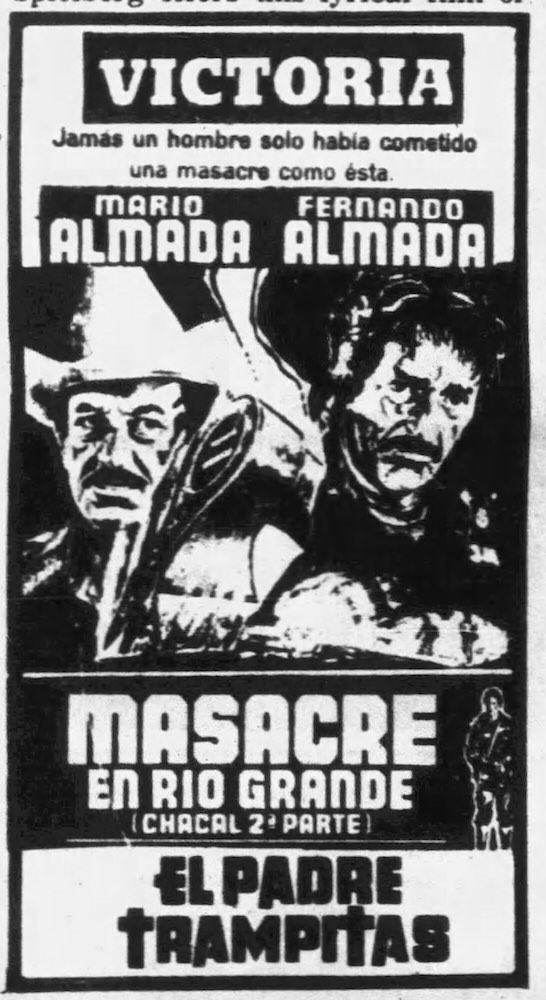
MASSACRE IN RIO GRANDE is a slightly more threadbare, albeit cheesier sequel to the Almada Brothers’ vehicle, THE DEATH OF THE JACKAL. The previous film ended with a heavy-breathing someone watching Sheriff Bob and his wife from the bushes (suggesting he's still out there), but since Roy was actually bobbing around at sea at the time, perhaps it was just the local asthmatic. Although it is often listed as a 1988 release, the film actually has a 1984 copyright and was likely filmed back-to-back with the first film sometime in 1983. It utilises many of the same locations in Texas (see the noticeable English language signs everywhere), including the massive abandoned ship that the Jackal calls his hideout. The sequel also features the same main cast returning. The main addition is Emilia Guiú, who is highly amusing as the boozy matron constantly on the hunt for her next bottle of spirits. Although cast as Bob and Roy’s mother, the veteran Spanish actress was actually a tad younger than Mario Almada (they were both born in 1922)! There is also the introduction of a female investigative reporter, Pat (Martha Ortiz), but it’s a largely thankless role, as she just clomps around in unsuitable footwear and makes shocked faces whenever she bumps into Roy.
Unfortunately, the main flaw of the sequel is Fernando Almada’s portrayal of the killer—the actor was more convincing as the stoic, hard-edged hero in Mexican action movies. Stripped of his Gialloesque fedora and mystique, Roy is almost workmanlike in his murder spree. He just seems like a ticked-off older middle-aged guy (with his moustache doing most of the heavy lifting), and sadly, he lacks the intensity and menace the role demands. In the previous film, there was a hint that he possessed superhuman slasher villain abilities. It isn’t developed much here beyond one hilarious sequence where he lifts a cop above his head, who is obviously a papier-mâché mannequin. Also, his motive—something or other to do with being messed up with his father’s suicide—is perfunctory and wholly unconvincing. Still, the sequel does have its moments. Any film featuring a five-minute bodypopping/breakdancing contest in a strip club (a clear nod to its 1983 filming date), interrupted initially by a gyrating topless dancer and later by a dead hostess crashing through an upstairs window and landing on the dancefloor, can’t be entirely bad (although it is a variation of a similar scene from the previous film). The movie also sets up the greatest of trash aesthetics: models versus psycho, when a “world-famous” photographer, Alan Parker, secures an unlikely permit for a fashion shoot on the murder boat. Admittedly, this leads to Roy invading the models’ dressing room and killing three of them with a sword, but this classic slasher setup sadly doesn’t live up to its potential, as it’s too brief and wastes the chance for chase scenes and suspense.
While with THE DEATH OF THE JACKAL, director Pedro Galindo III appeared to be having fun with slasher movie tropes, there is—aside from a couple of wild set pieces—less of the zip found in the first one, and it largely ignores the sequel maxim of go bigger (though he returned with the more lively backwoods slasher HELL’S TRAP (1989)). Admittedly, the version I saw may have been censored, but apart from a gory drill to the head, most of the death scenes are brief to the point that it’s not always clear what actually happened. A good example is the murder of a woman taking a shower, with the violence merely implied by pouring a bucket of stage blood at her feet. However, fitting the Alamada Brothers’ action movie reputation, MASSACRE IN RIO GRANDE does feature a lengthy sequence where Bob and other police officers break up a drug bust on an airstrip.
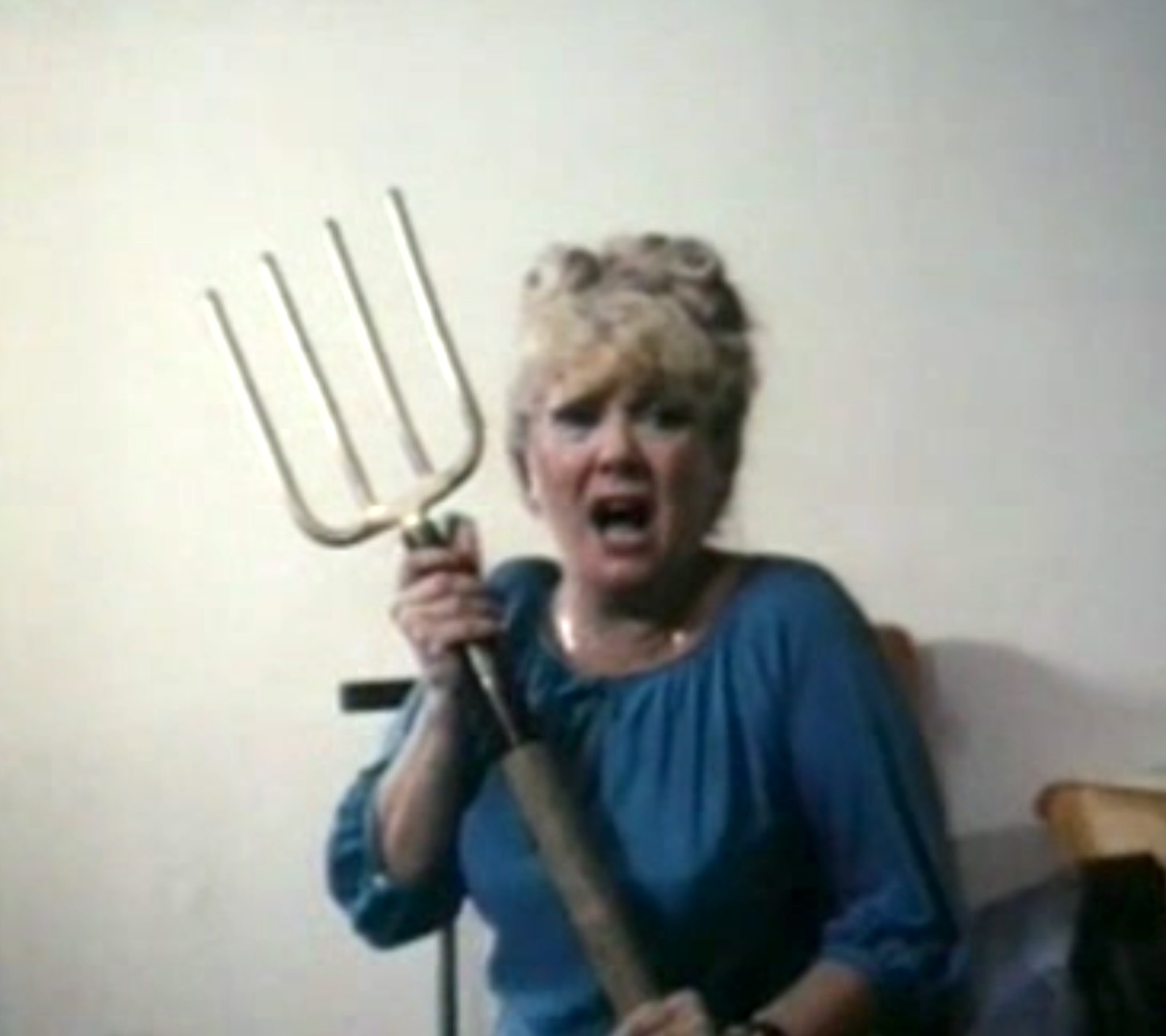
The film was released to Spanish-speaking cinema screens in California, Texas and Florida during April and May 1985 (and was still in release in 1986). It concludes with a vague hint that there might have been another chapter, when Roy falls onto a pitchfork, then walks to the beach and into the sea. However, the sequel appears to deliver on the promise the first one failed to fulfil: The Death of the Jackal.
Want to read reviews before everyone else (and get exclusive perks), and help keep Hysteria Lives! online (for as little as a dollar!)? Check out now on Ko-fi.
BODY COUNT 14:
Female 5 / Male 9
MASSACRE IN RIO GRANDE (1985) (Full Movie - currently no ENG subs)
Thank you for reading! And, if you've enjoyed this review, please consider a donation to help keep Hysteria Lives! alive! Donate now with Paypal.