USA, 1973
Review: JA Kerswell
The first—and arguably the most notorious—of SF Brownrigg’s regional proto-slashers. A new nurse at a remote sanitarium in Texas arrives to find that perhaps the lunatics have truly taken over the asylum. A one-time ‘video nasty’, DON’T LOOK IN THE BASEMENT, remains a wildly gonzo low-fi grindhouse assault on the senses.
Dr Stephens (Michael Harvey) employs an unusual approach to treating his patients: instead of calming their neuroses and disorders, he amps them up in the belief that this would force them to confront their madness and potentially find a cure. However, this approach spectacularly backfires when inpatient Judge (Gene Ross) hits the doctor in the back during an ill-advised spot of axe therapy. This occurs after his nurse (Jessie Lee Fulton) tells him she cannot cope after being threatened by another patient, Harriet (Camilla Carr). Following the tragic incident, Dr Geraldine Masters (Annabelle Weenick) steps in to take control of the sanitarium.
Soon afterwards, a naive young nurse, Charlotte (HORROR HIGH’s Rosie Holotik (also 1973)), arrives after accepting a position at the facility at the invitation of the seemingly late Dr Stevens. Initially, Dr Masters is hesitant to let the nurse stay, but agrees she can remain temporarily in light of the recent tragedy. Although the nurse doesn't bother to question why the authorities haven’t been involved in Dr Stevens’ messy assault, Charlotte is mildly unsettled by the fact that none of the doors in the house has locks. She dismisses the warning from the oldest resident (Rhea MacAdams) to get out while she still can as the ramblings of a disturbed patient.
However, she eventually begins to suspect that all is not as it seems at Stephens Sanitarium. There is a killer on the loose, and Nurse Charlotte must fight not only for her life but also for her sanity after she uncovers what lurks in the basement …
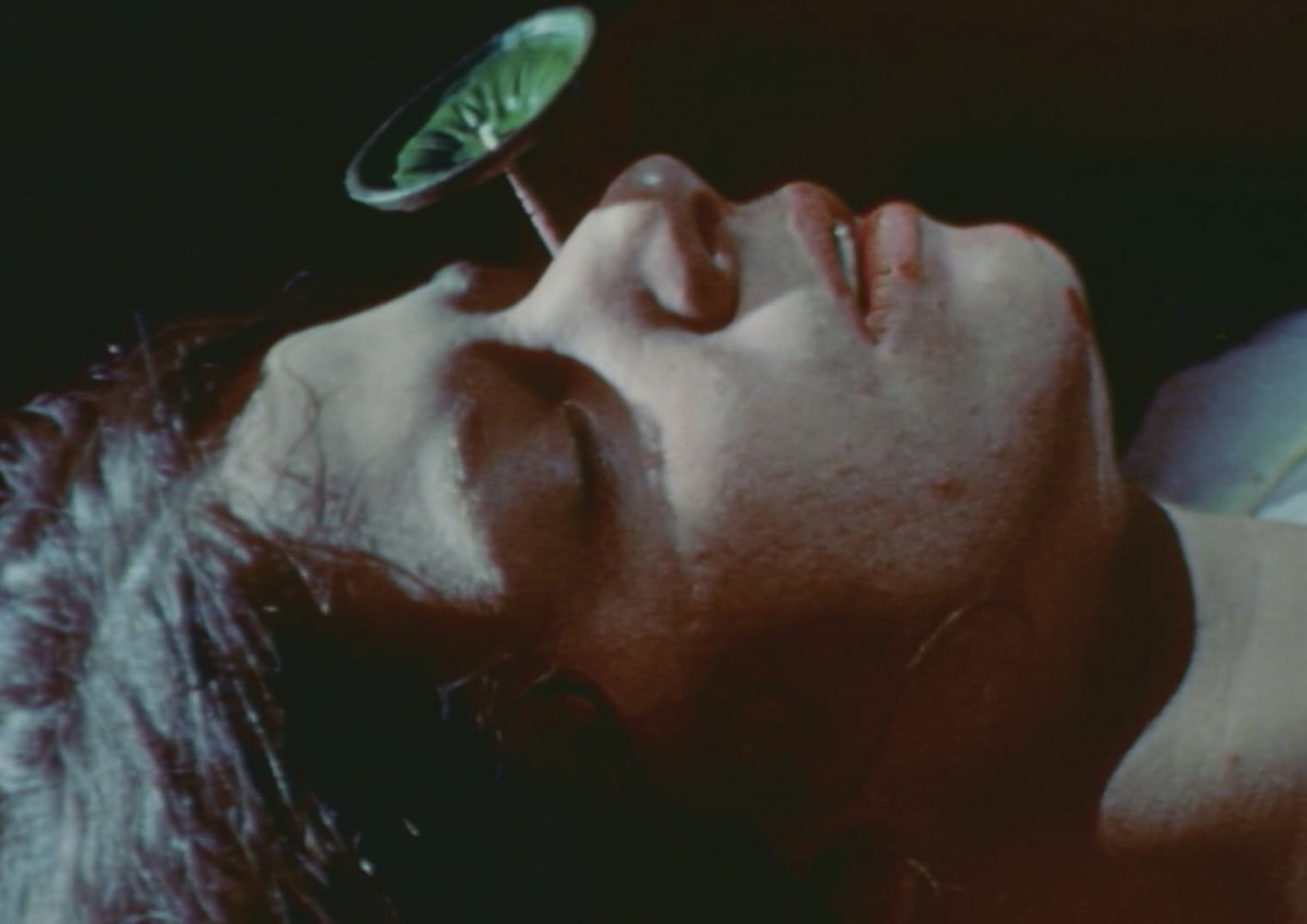
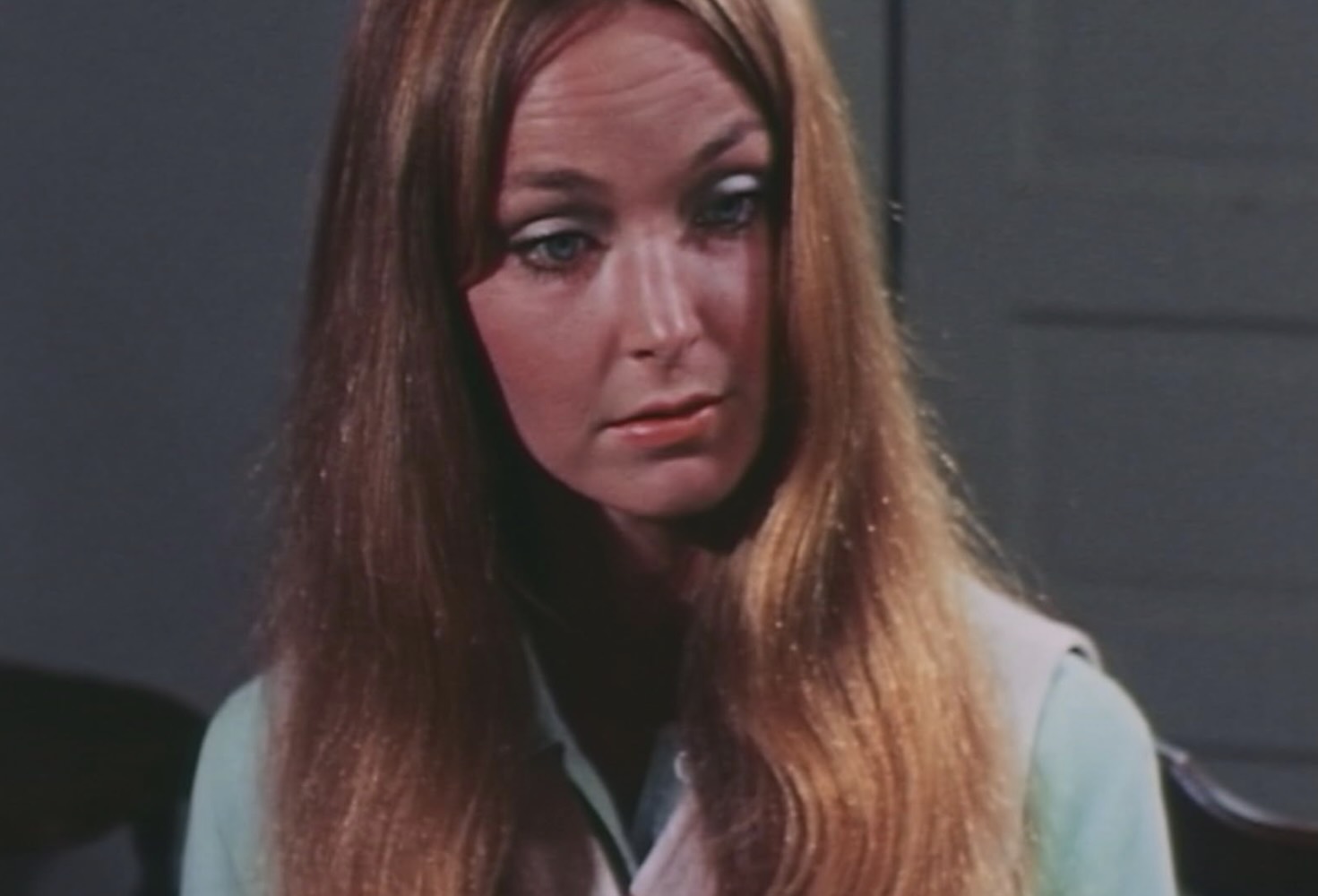
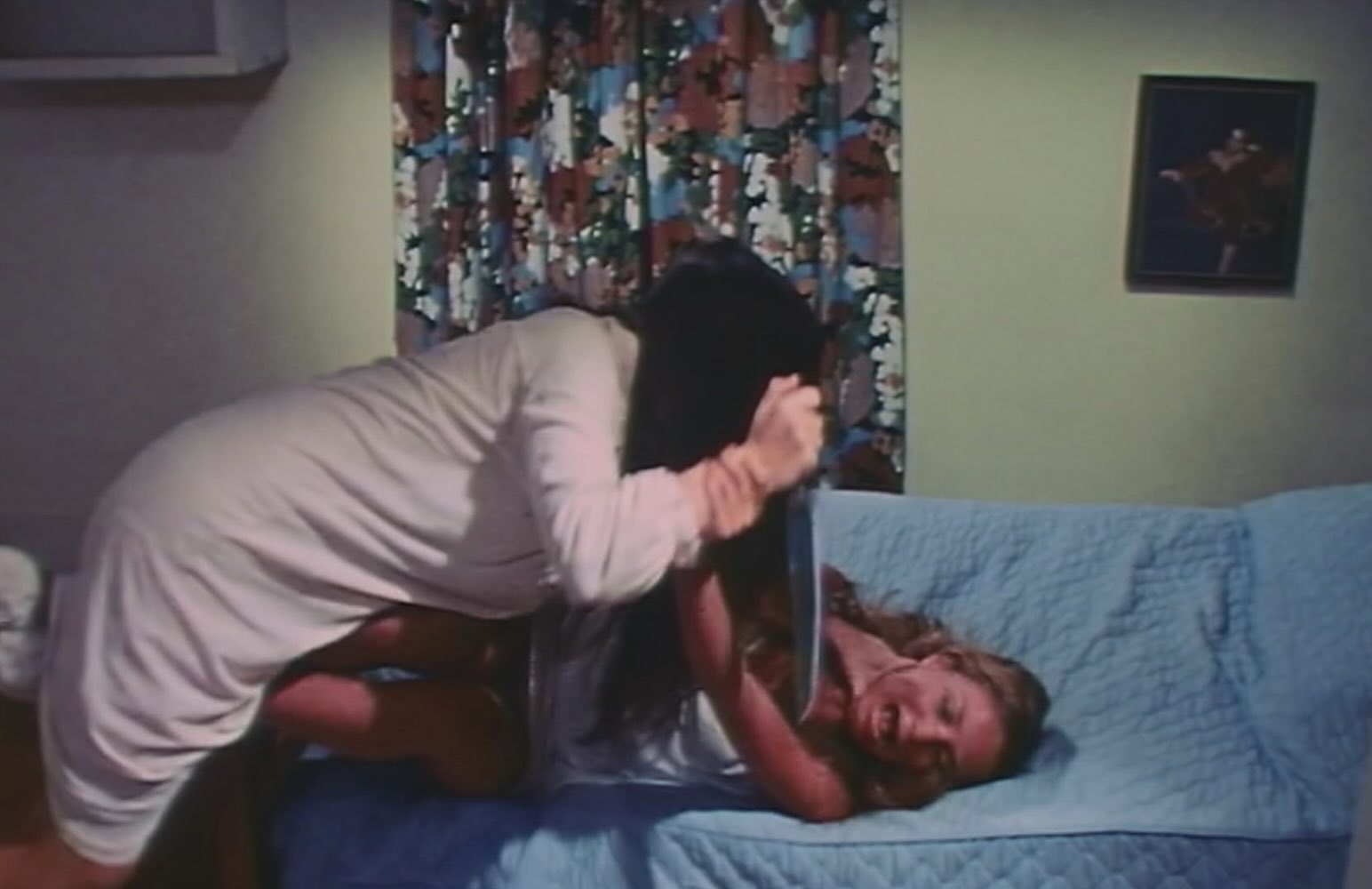
DON’T LOOK IN THE BASEMENT gained notoriety after it was temporarily banned in the UK as a ‘video nasty’, despite already being pre-cut (it was subsequently removed from the official list of 39 titles that were successfully prosecuted for obscenity). While it fits in with those other early ‘70s ‘gorenography’ progeny of Herschell Gordon Lewis, such as DEAR DEAD DELILAH (1972), SCREAM BLOODY MURDER and CARNIVAL OF BLOOD (both also 1973), its bloody violence—even uncut—is relatively mild compared to many of the more extreme so-called ‘video nasties’. Also, although as gaudy as it is, the film lacks the psycho-sexual perversion that Brownrigg infused in his subsequent works. However, despite—and in some ways because of—its low budget (even the sanitarium’s sign is handwritten) and ragged, super-saturated film stock (that quintessential Grindhouse look), it gives the movie the feel of a demented fairground ride careening off the rails—complete with patients lunging from closets, knife in hand. It helps that the cast’s performances are so—for want of a better term—committed. Everything and everyone is so over-the-top that it feels like a thoroughly demented nuthouse turned into a ghoulish funhouse. This effect is aided by touches of ironic comedy in its first half—particularly the bemused telephone repairman, played by Robert Dracup, who usually worked behind the scenes—and by the film's introduction of a prank-loving character reminiscent of those seen in later slasher movies. As is typical in the genre, mental health isn’t handled with particular sensitivity (including the child-like adult black character, Sam (Bill McGhee), who has undergone a lobotomy), but the acting is generally effective enough to inject something approaching pathos amidst the caricatures.
However, the twist that Dr Masters is actually one of the patients is so heavily telegraphed (even the film’s tagline gives it away) that it isn’t much of a spoiler, although it remains a clever sleight-of-hand for the uninitiated. Nurse Charlotte’s descent into madness within a house of the insane is also well executed (despite Holotik’s limited thespian skills), reflecting Marilyn Burns’ trauma-driven breakdown in another state-shot horror, Tobe Hooper’s THE TEXAS CHAINSAW MASSACRE (1974) (which was in production when Brownrigg’s film was first distributed under its original title THE FORGOTTEN).
DON’T LOOK IN THE BASEMENT was filmed over 12 days during the summer of 1972 in the sleepy town of Tehuacana, Limestone County, Texas. The sanitarium location was actually an unused girls’ dormitory. The movie had a budget of around $100,000 and involved Texas talent both in front of and behind the camera. During filming, Dallas-based producer Walter Krusz mentioned that he was still debating the film’s title (another option was THE SILENT SHRIEK)—and he was drawn to the project because “The American public loves to be shocked” (comparing it to THE GODFATHER (1972)!). Annabelle Weenick, who portrays the fake doctor in the film, also served as assistant director (albeit uncredited). Actress Camila Carr (who later became a regular in the Brownrigg series, along with several other cast members) told local press during filming that she deliberately exhausted herself before shooting her scenes to give her character a worn-out, haunted appearance. The press also marvelled at the fact that the production claimed to use “five pounds of imitation blood”.
Living up to its original title, the film risked being forgotten after its limited, independent release to theatres in the Southwest in May 1973. However, it was picked up for wider distribution by AIP (American International Pictures) and Hallmark Releasing Corporation. The latter had released (and made a good deal of money from) Wes Craven’s brutal psycho revenge saga THE LAST HOUSE ON THE LEFT (1972). Trialling several titles, including DEATH WARD #13 and SNAKE PIT, they eventually settled on the film’s better-known title and pushed it with advertising that even borrowed LAST HOUSE’s sensationalist tagline: “To avoid fainting, keep repeating it’s only a movie.” This paid off, with DON’T LOOK IN THE BASEMENT grossing around $1 million in domestic rentals.

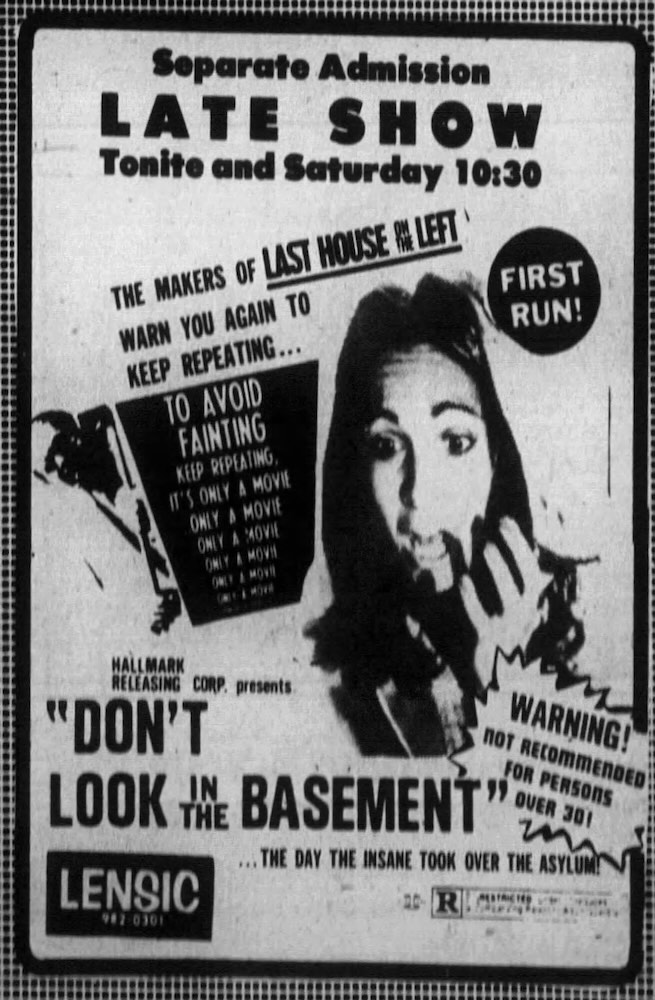
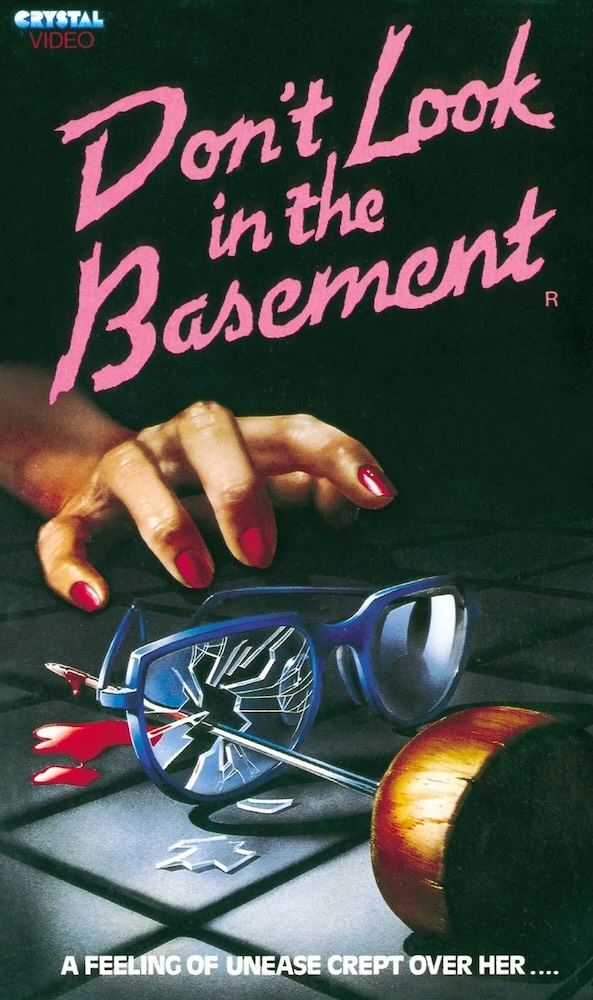
However, the critics were not especially kind. Donald Miller in the Post-Gazette said, “The picture is crudely made, awkwardly filmed and in miserable color. But it does have obvious suspense and if you are a horror film addict you will want to know how everything is resolved. But I really could not recommend it.” Andrew Reschke, in the Syracuse Herald Journal, said, “The cast of unknowns won't benefit from this trash. They are sufficient for their roles, but that doesn't say much. The dialogue is trite, the film drags, and even the blood looked like ketchup.” Roger Grooms, in The Cincinnati Enquirer, criticised the film sharply, saying, “Where do you really begin? When you see a film so technically incompetent, so morally bankrupt, so intellectually barren, so senselessly brutal, where do you start? "Don't Look In The Basement," currently greening gills at the Showcase Cinemas, wins just about every abomination award going.” However, in one rare good notice, Gregg Swem in the Courier Journal wrote, “"Basement" is a sort of horror-comedy. Its plot has the mysterious elements, and it's scary. What's more, the fright is handled subtly. In short, the film works.”
While over the next few years, Brownrigg explored increasingly kinky, psycho-sexual themes with his subsequent proto-slashers, often returning to use many of the same cast, his son released a belated sequel almost 20 years after his father’s death. Anthony Brownrigg’s DON’T LOOK IN THE BASEMENT 2 (2015) directly continues the story, featuring some of the surviving characters — including actress Camilla Carr in a different role as a bedbound patient — where the ghosts of the past threaten to possess both staff and residents at the same location. Despite a slick presentation, the sequel, with its relatively low budget, admittedly lacks the gonzo energy of Brownrigg Senior’s original psychodrama.
BODY COUNT 10:
Female 5 / Male 5
DON'T LOOK IN THE BASEMENT (trailer)

Thank you for reading! And, if you've enjoyed this review, please consider a donation to help keep Hysteria Lives! alive! Donate now with Paypal.