UK, 1971
Review:JA Kerswell
The black gloves go to Cornwall in this British genre effort, which arguably draws as much on the Italian Giallo as on homegrown Gothic horror. A group visiting the remote seaside home of an eccentric artist are bumped off one by one by a mystery killer as talk of Japanese occult mysticism swirls. Something of a dud (and I’m a fan of British horror from this period), it is still interesting to see how the proto-slasher tendrils continued to influence the UK genre in the early 1970s.
The film opens with a genuinely eerie and gruesome (at least implied) scene in which a figure plastercasts a nude woman and pours molten brass through the lone open eye socket, just as her eye opens to see the searing liquid flood in. It quickly cuts to an open show at a London art gallery, where the proprietor, John Davies (James Bolam), is feverishly trying to sell a series of artworks (that we later learn have been stolen from Cornish artist Victor Clare (Mike Raven) by his wayward, often drunk son Michael (Ronald Lacey)). John is in hock to his benefactors, George (Kenneth Keeling) and his wife, Joanna Brent (Melissa Stribling—who played Mina in Hammer’s 1958 sensation HORROR OF DRACULA), and needs to pay back their loan sharpish. George is very taken by the life-size bronze statue of a naked woman, but John tells him it has already sold. When George sneaks back into the gallery later that night to fondle the bronze curves, someone is waiting and suffocates him with a plastic bag.
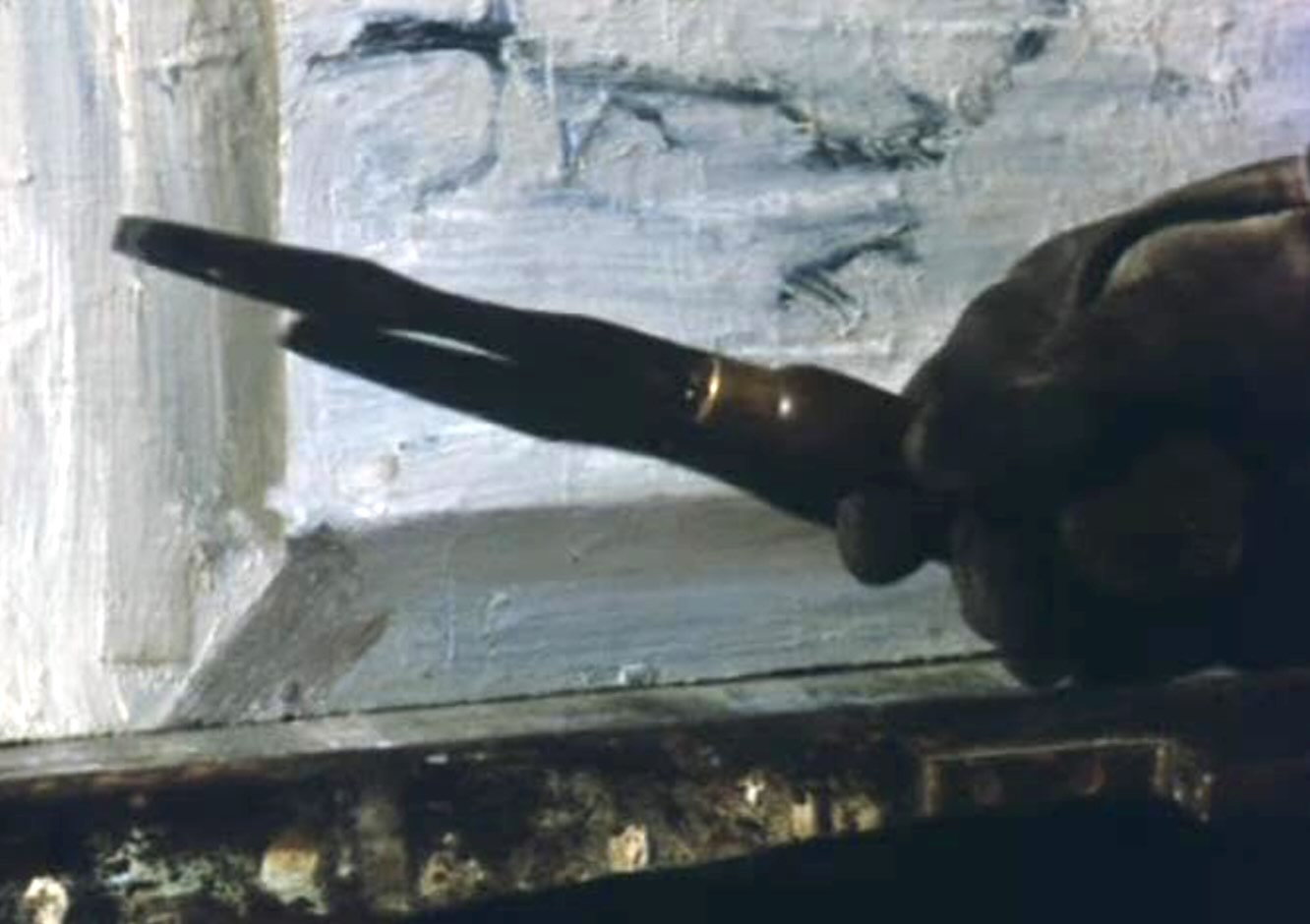
Buoyed by strong sales yet still in need of funds, Davies suggests to Michael that they visit his father in Cornwall to strike a deal to sell more of his artworks. John is joined by his girlfriend, Millie (Mary Maude), and by Michael and his young wife, Jane (Beth Morris). They travel neither in comfort nor style in a Morris Minor Traveller. Arriving at the remote house near an abandoned tin mine, they are introduced to Michael’s mentally unwell mother, Dorothy (Betty Alberge), who dresses like a little girl and carries a dolly; also to family friend Bill (John Arnatt), who seems to float around the place with no fixed abode. Eventually, the artist makes himself known and begins playing mind games with them, though he seems open to making money. Victor also takes a shine to Millie and Jane, keen to make them his next muses after growing tired of his existing model, Marcia (Judy Matheson). Millie is unnerved by Victor’s attention and tries to avoid him. However, after an explosive argument with her husband, Jane agrees to pose for the artist, but is stabbed to death with a palette knife by someone wearing black smelting gloves, and her body is disposed of over a cliff.
When John returns to London to try to secure funds to buy the artworks, Millie finds herself left alone with a ragtag group of eccentrics, one of whom is a vicious murderer …
Sadly, CRUCIBLE OF TERROR is one of the worst examples of early ‘70s British horror. It generally lacks the bawdiness and campier elements that elevate trashier movies of the time, which adds to their sheer enjoyability. Threadbare and largely nonsensical, it flails with a magpie approach, grabbing from all sorts of horror subgenres without successfully settling on one, let alone using any of these elements particularly well. It seems to hinge on a highly unlikely coincidence and a haunted kimono, drawing on occult horror typified by the works of Dennis Wheatley (although not Satanism specifically), and mixing in elements from the Vincent Price-starring HOUSE OF WAX (1953) (itself a film with influential proto-slasher leanings). There was likely some influence from the Italian Giallo—although it is worth noting that Dario Argento’s THE BIRD WITH THE CRYSTAL PLUMAGE (1970) was released to British screens as THE GALLERY MURDERS in early 1971 with little fanfare (and almost exclusively playing second fiddle on double bills). ASSAULT (1970) (another British proto-slasher with a black-gloved killer starring BIRD’s Suzy Kendall) was shot before Argento’s film was released in Britain (but not before its release in Italy). British filmmakers were probably aware of that film’s breakout success in Italy, but the barrage of early ‘70s proto-slashers was also influenced by the German Krimi and the still-rippling echoes of Hitchcock’s PSYCHO (1960).
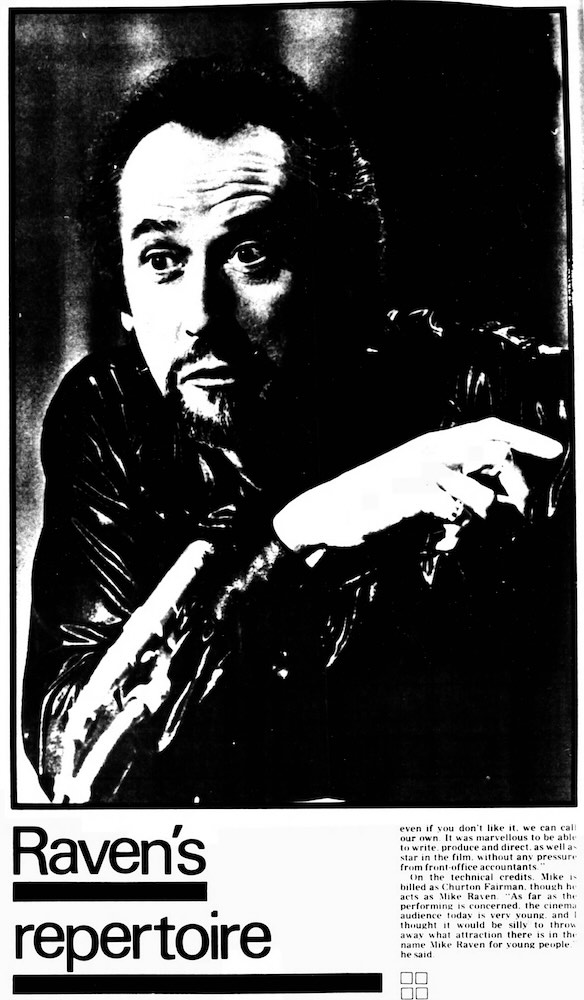
Speaking of Vincent Price, Mike Raven was clearly attempting to become another horror icon in that mould. Unfortunately, he lacked the gravitas to anchor the film, coming across more like a slightly camp geography teacher whose plummy accent was more Basil Fawlty than Christopher Lee. This lack of presence is only further highlighted by a handful of good performances from other cast members—especially Ronald Lacey as the flailing, drunk son. Raven’s real life would have made a far more interesting story: a closeted flamenco-playing ballet dancer turned pirate radio and Radio 1 DJ, who had a fascination with the occult and usually wore a cape. He lived in a black-and-white flat in Chelsea with his proto-Goth wife and family (who all dressed in identikit black clothing, apart from a colourfully rebellious daughter) and even had a black dog named PP. In a case of life imitating art, when his career in horror cinema failed (he made one last effort after this: DISCIPLE OF DEATH (1972)), he became a sculptor, moving to Cornwall in relative obscurity after falling in love with the county while filming CRUCIBLE OF TERROR. He dug his own grave on Bodmin Moor, and he passed away in 1997. In an interview about his career with The Reading Evening Post, Raven admitted that CRUCIBLE OF TERROR—which he had partially financed himself—had gone “very wrong”. His dreams of touring Grand Guignol around Britain went unfulfilled.
Speaking of funny coincidences, as an aside, I was around two years old when CRUCIBLE OF TERROR was being filmed and had my own encounter with an eccentric West Country artist when my parents commissioned Devon artist Robert Lenkiewicz to draw my portrait. Lenkiewicz was accused of being death-obsessed and, after he passed away, was found to have kept the embalmed body of a 72-year-old tramp (who had died of natural causes) in a drawer in his studio for 18 years. I guess I perhaps escaped being made into a bronze statue of a toddler!
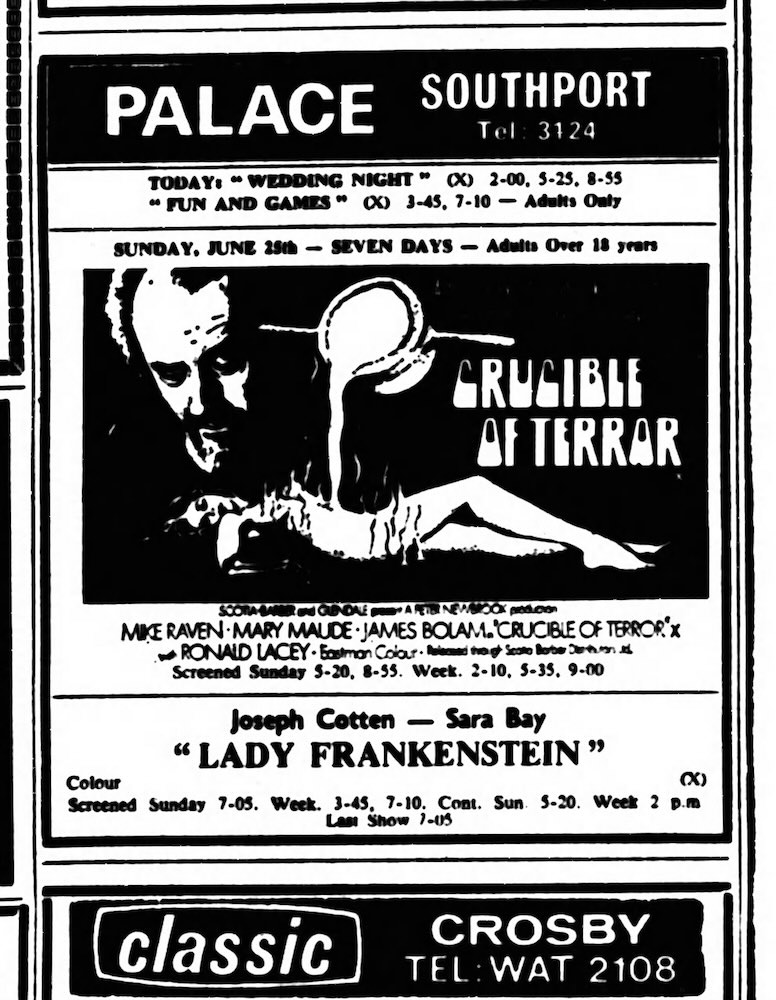
The film was shot on location around St Agnes in Cornwall and at Shepperton Studios, starting in July 1971. James Bolan would be well known to those who grew up with British TV (often in comedies such as THE LIKELY LADS). Burmese/English actress MeMe Lai was also a regular in low-budget British films around the time and later carved out a niche in cannibal gut-munchers such as Ruggero Deodato’s LAST CANNIBAL WORLD (1977); here she’s barely glimpsed and mostly seen under layers of unconvincing monster make-up. Perhaps unsurprisingly, CRUCIBLE OF TERROR failed to set the UK box office alight on its muted April 1972 release, paired on a double bill with the Italian import LADY FRANKENSTEIN (1971), and seemingly failed to generate any reviews in the British press at the time.
BODY COUNT 7:
Female 4 / Male 3
CRUCIBLE OF TERROR (1971) Australian VHS Trailer