USA
Review: JA Kerswell
Director Ulli Lommel’s follow-up to his own 1980 surprise box-office success, THE BOOGEYMAN II (infamous in the UK as a ‘video nasty’ under the title REVENGE OF THE BOGEY MAN) is a confounding Poverty Row rehash, occasionally enlivened by flashes of intriguing, self-referential ideas and dark, satirical humor. The sequel—which even suggests the intriguing possibility that it was intended as a spiritual revenge of sorts for German Hollywood’s Golden Age director Josef von Sternberg—follows the survivor of the first film, who accidentally unleashes the cursed mirror at a Tinseltown party, resulting in deaths by garden shears, a corkscrew, and … shaving foam.
It has been six months since Lacey (a returning Suzanna Love) survived not only a supernatural murder spree but also being briefly possessed. It’s not surprising that she needs a break, so Lacey heads from her home in Maryland to stay with an old friend, Bonnie (Shannah Hall), near the Hollywood sign in LA. There, she finds Bonnie’s husband, German movie director Mickey (Love’s then real-life husband Ulli Lommel), filming, under duress, extra topless pickup shots around their swimming pool for his latest film, which his producer, Bernie (Bob Rosenfarb), insists are vital to its success.
Over dinner, Bonnie pushes Lacey to tell them what happened six months ago and why the murderer has never been caught, prompting Lacey to enigmatically say there was no murderer and that, to explain, she has to go back to the beginning. Lacey recounts these events through flashbacks (one thing most people know about BOOGEYMAN II is that much of the first half of the movie features lengthy flashbacks to the 1980 movie, mostly showing the death scenes) and reveals that she has kept the cursed piece of the broken mirror that allowed her mother's slain lover to reach out from death and impale various unfortunates with levitating spiky objects. Quite a keepsake! Still, she reassures them that it is perfectly safe because she surrounds it with woo-woo crystals and Native American artifacts.
Later that night, Bonnie has the bright idea of turning Lacey’s trauma into the latest horror hit, telling Mickey that, after a string of arty flops, he needs a hit to keep the lights on at their Hollywood mansion. Despite Lacey’s doubts about the plan, word soon spreads that they will be casting for the movie, and they organize a party for prospective actresses and assorted Tinsletown producers, agents, and hangers-on. However, the soiree turns deadly after a mystery figure retrieves the cursed shard of broken mirror, and it shines bright like a diamond …
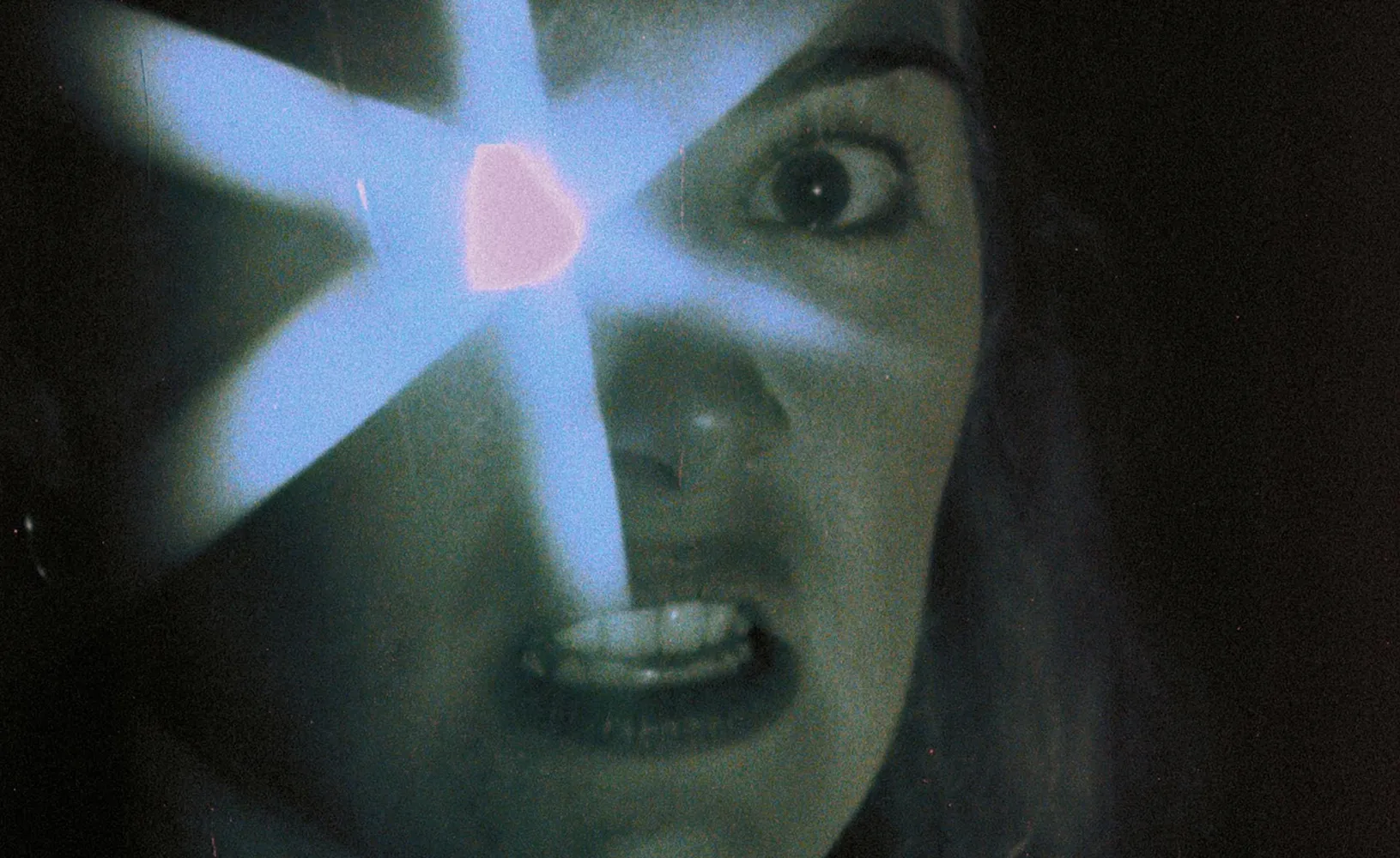
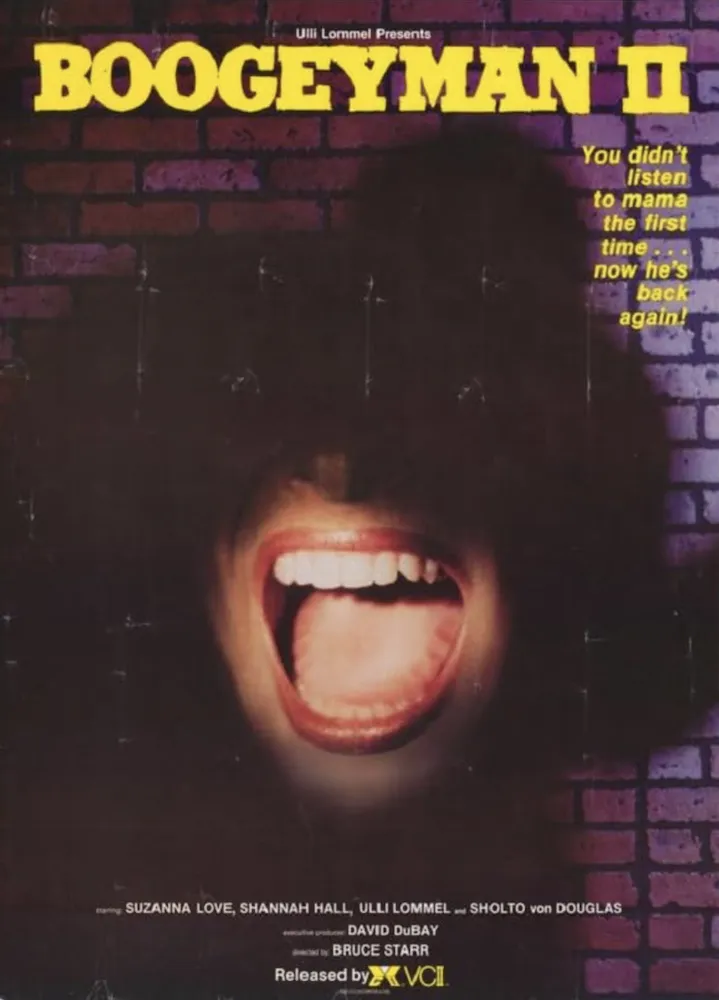
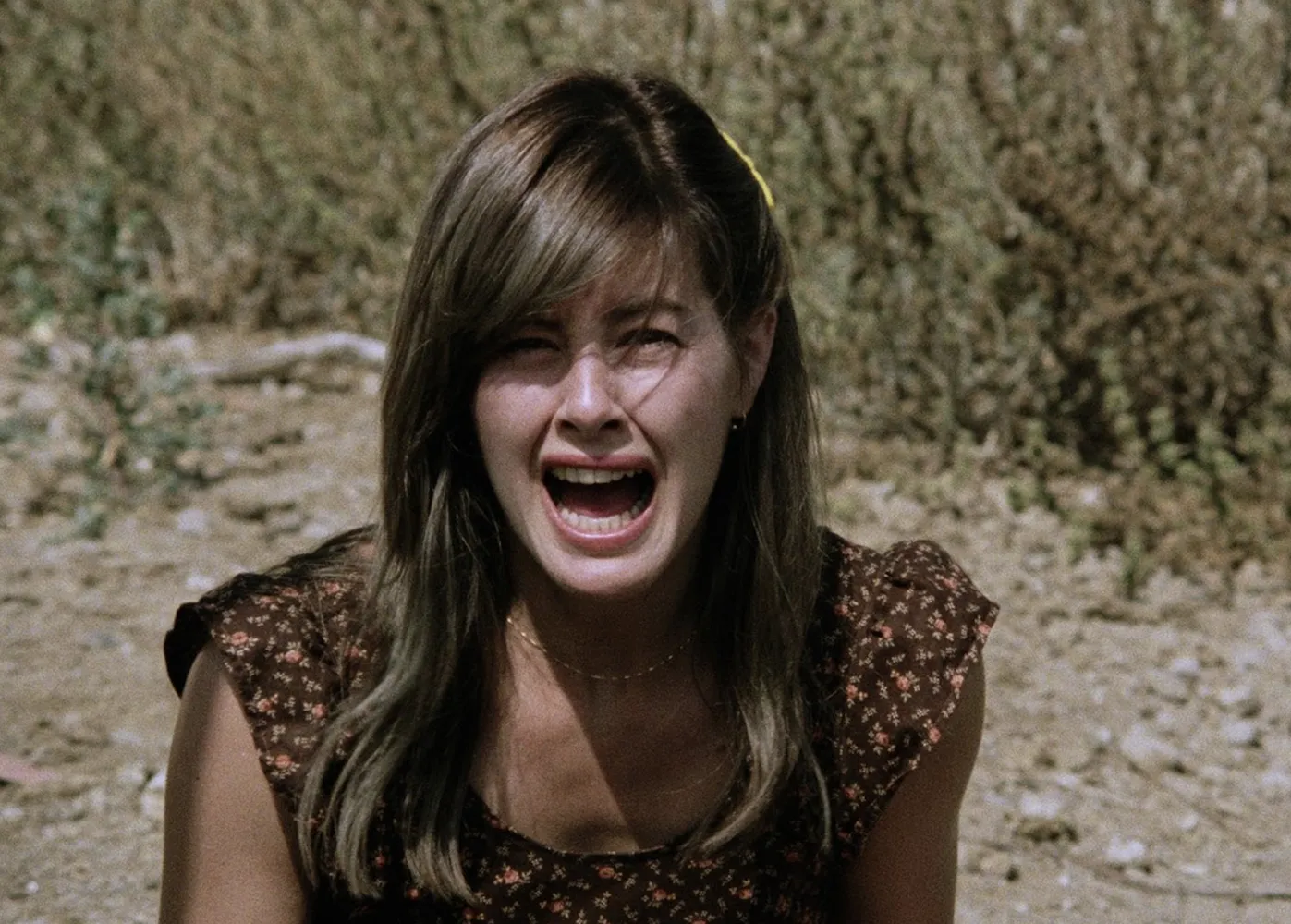
Wow. Where to start? Compared to 1980’s THE BOOGEYMAN—where Lommel put THE EXORCIST (1973), HALLOWEEN (1978), and THE AMITYVILLE HORROR (1979) through a blender and came up with a lyrically oddball yet surprisingly commercial concoction that connected with audiences—the sequel, in many ways, looks like amateur hour. The sound is sometimes muffled, the acting is often appalling without the benefit of at least being funny, the camerawork is pedestrian, and the special effects are anything but special. Yet beneath this apparently lazy cash grab run some pretty interesting self-reflexive ideas about genre cinema and a not-very-flattering view of Hollywood itself.
In fact, a fairly persuasive case could be made that BOOGEYMAN II is the very first postmodern slasher movie (albeit accidentally so), a good thirteen years before the release of SCREAM in 1996; it is typified by a self-aware tone, with lines such as Bernie telling Mickey, “The public doesn’t want the psychos and the slashers. Halloween is old hat. They want mysterious forces that move and poltergeists.” There are rumors—spread by Lommel himself, who may or may not be the most reliable source (there are no mentions in the trade press at the time)—that he was courted by Paramount to make a bigger-budgeted sequel to his 1980 horror hit (THE BOOGEYMAN cost around $321,000 to film and made a good profit, with Lommel claiming a worldwide gross of $25 million, although a trade journal in 1987 said it made just over $2 million, which sounds more likely). However, he reportedly said he threw the deal in the trash after becoming disillusioned with studio executives' demands. Now, it is unlikely that Paramount (even giddy on the box office success of FRIDAY THE 13TH (1980)) would have made a sequel to THE BOOGEYMAN under their own banner, but they may well have been interested in side-funding an independent production with the option to release it. What is known is that Lommel was hard at work on a script for the sequel when the San Francisco Chronicle interviewed him in mid-November 1980. He told them, somewhat bizarrely, that he was going to set the sequel in a kitchen, saying, “There is nothing more ordinary than a neighborhood house, and within it there is nothing more mundane than a kitchen.” The article—which states that filming would already be underway by the time the paper hit newsstands (it wasn’t)—said of the violent content in the sequel he promised: “… the death scenes in "Boogeyman II” will be even more horrendous, more exploitative and, in the final analysis, reap him even greater rewards at the box office.” It is also worth noting that, whilst it is true that horror writer Dennis Etchison did work with Lommel on a sequel to THE BOOGEYMAN, it appears that, according to this 2017 interview, the ultimately unrealized project happened after the release of the 1983 sequel and so was entirely unconnected to Paramount’s involvement in 1980/1981 (if that was ever actually a thing).
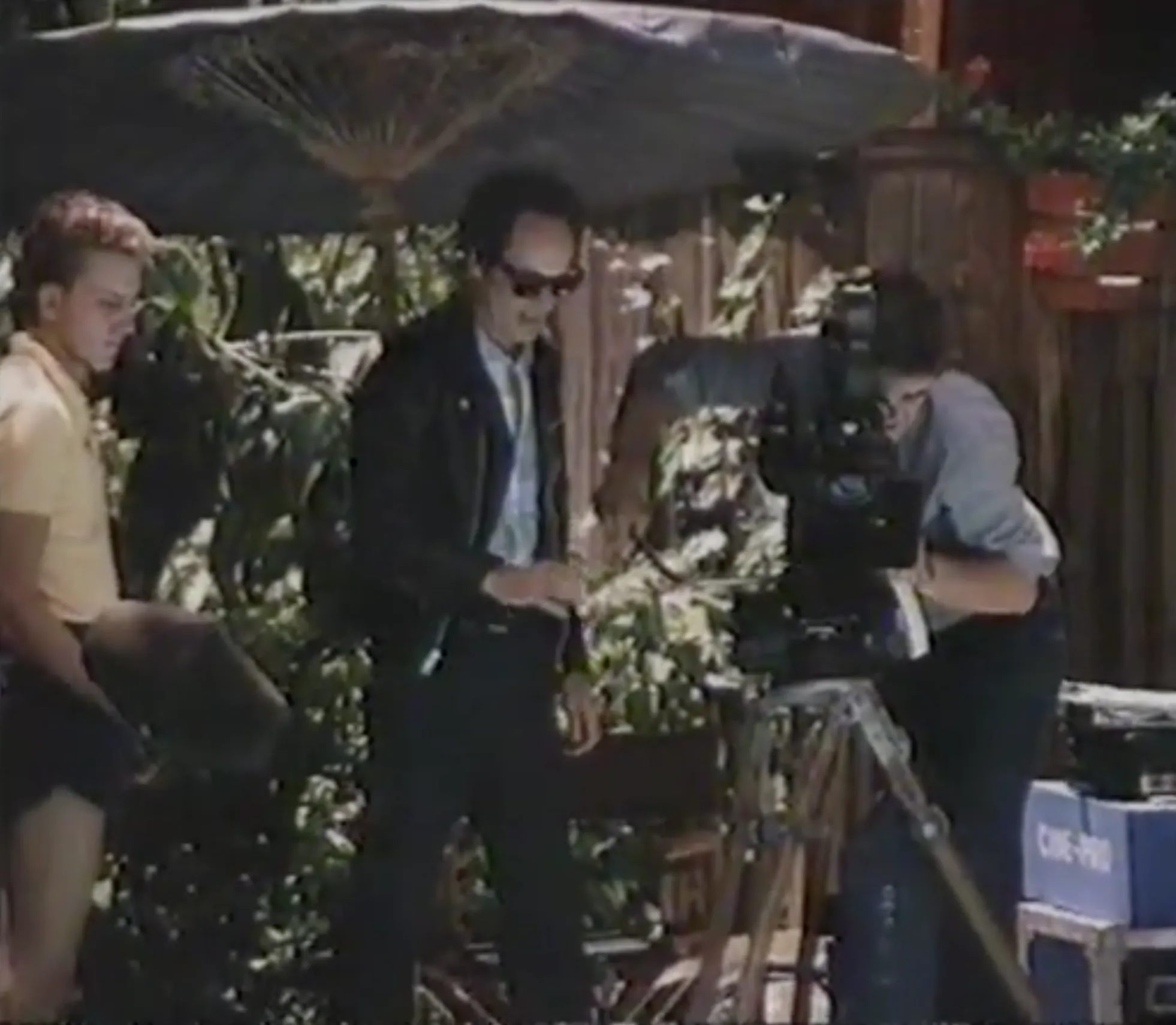
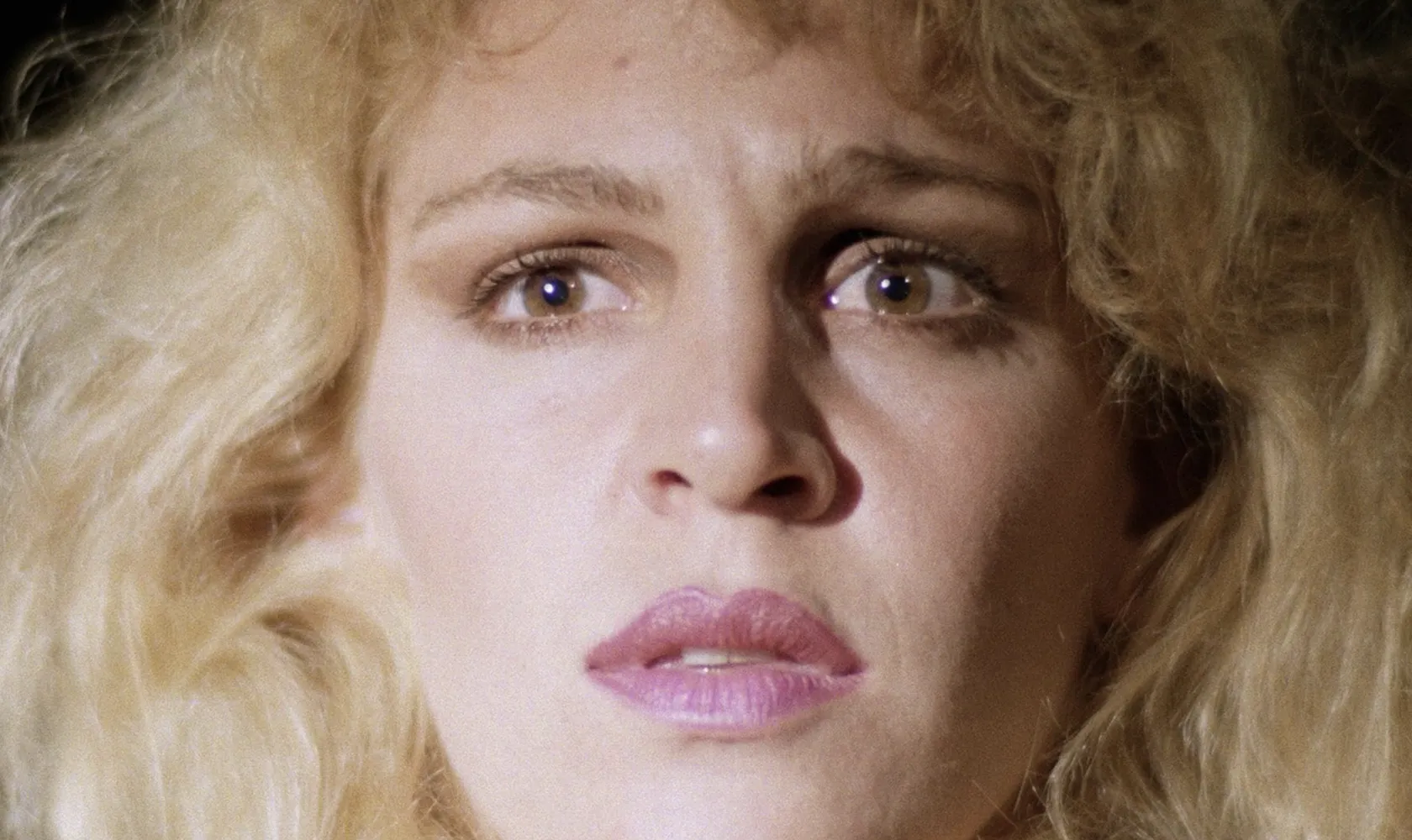
What exactly happened is lost to the mists of time (Lommel died in 2017). It is unclear whether Paramount balked at the film’s anti-Hollywood satire (or at the prospect of bankrolling a slasher film set in a kitchen). Or perhaps their meddling or rejection of his ideas emboldened Lommel’s vitriol against a system he initially seemed very keen to be part of. Although previously celebrated in Germany and in arthouse circles in the United States for his Warhol collaborations, Lommel briefly pursued commercial genre cinema (albeit with his distinctly quirky take). Speaking about THE BOOGEYMAN, he told the San Francisco Chronicle in that late 1980 interview, “I’ve finally reached a meat and potatoes audience instead of students and intellectuals, and I’m happy. I’m finally enjoying some success. It wasn't until I got to America that I went to see the reaction of an audience. What a fool I had been not to do it years before. In America, I knew I would have to change drastically to survive. In America, you have to make money if you want to work. I want to work. I want to survive.” However, when I interviewed him back in 2000, Lommel complained that Hollywood was run by Nazis, stating: “Joseph Goebbels—who is my favorite nasty PR guy—returned to Hollywood during the 80s and has been ruling ever since in the guise of … well, you name them.”
BOOGEYMAN II is most interesting when Lommel is autobiographical. His character rails against adding nudity for commercial reasons, but his producer tells him: “Mickey, Mickey, you don’t understand in America exploitation is a genre.” His wife tells him he has to make films he doesn’t want to make to have the freedom to make the ones he does. Even the Hollywood party-goers are introduced with light under their faces to make them look like Universal Horror villains, suggesting that Lommel considered there were no true innocents in Tinsletown. Most telling is the scene where Mickey is reading Kenneth Anger’s infamous gossip-as-art tome Hollywood Babylon (which features now largely debunked stories of excess, scandal, and murder during its studio Golden Age). In one scene, the camera lingers on a photo in the book of boundary-pushing German director Josef von Sternberg, who clashed with the studio system. Notably, although Sternberg was successful in Hollywood in the 1930s, his uncompromising approach often conflicted with the studio’s desire to maximize profits (which, in Lommel’s mind, probably made him something of a fellow traveler). Lommel’s sequel even features a character named Joseph (Sholto von Douglas), who plays Mickey’s butler, whom he inherited from a fictional deceased star of Josef von Sternberg’s movies. Ultimately, the mayhem in BOOGEYMAN II can be widely read as a subversive attack not just on studio executives but on every part of Hollywood—and could well have been intended by Lommel as Josef von Sternberg’s revenge from beyond the grave. Although what the director of THE BLUE ANGEL (1930) (and frequent Marlene Dietrich collaborator) would have made of Lommel's bargain-basement film is anyone’s guess.
Unfortunately, the clever satire and the slingshots are wrapped in a decidedly half-baked genre piece, and the attack and disdain also seem to extend to its intended audience. Again, in the San Francisco Chronicle piece, Lommel said of THE BOOGEYMAN, “I am not betraying my audience. I'm not ripping them off. I'm giving them what they want. I filmed the skewering scene for three days from every conceivable angle. I wanted that death scene to be the best.” However, by the time the sequel rolled around, the death scenes were so badly staged, rushed, and ridiculous (death by shaving foam and electric toothbrush!)—not to mention mostly non-graphic—it seems Lommel was not only lazy but contemptuous of his audience as well. Even if the murder scenes were meant to be funny (Lommel’s father was a comedian), the joke doesn’t land. At times, BOOGEYMAN II is so bad that it seems plausible he was completing a contractual obligation against his will.
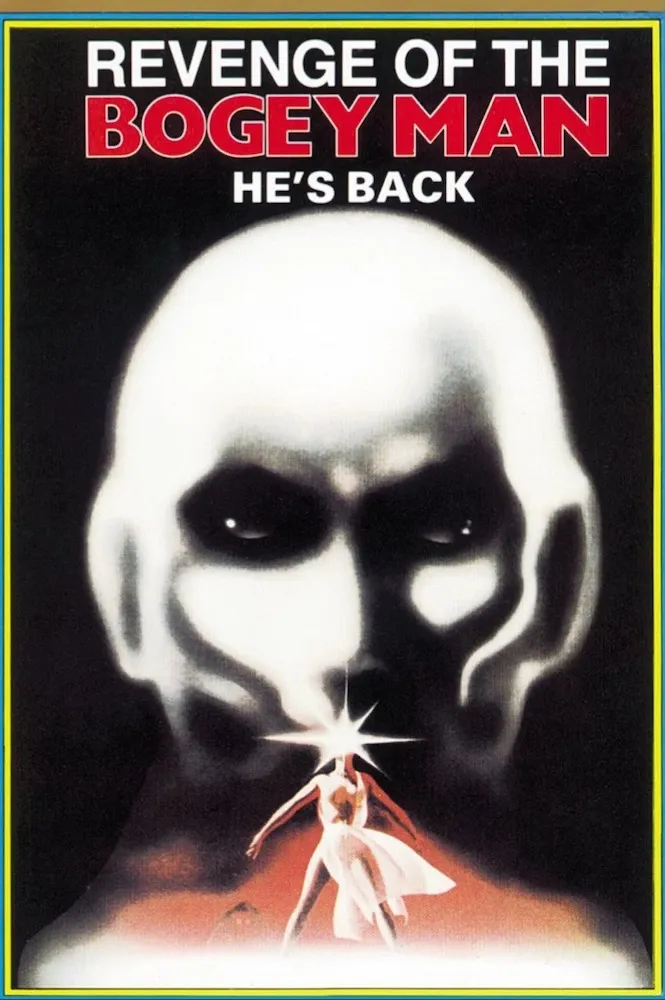
Some mystery still shrouds the film’s production, but it seems likely it was shot in 1981 in LA (and finished in 1982) on 35mm; mostly at Love and Lommel’s real Hollywood home. Lommel starred, co-wrote, and co-directed the film. Far from being a major studio release, BOOGEYMAN II bypassed cinemas almost everywhere except West Germany; it emerged on video in North America with little fanfare in the summer of 1983. However, it gained notoriety in the UK when it was released under the title REVENGE OF THE BOGEY MAN in February 1984, attracting the attention of the law purely because of the lengthy flashbacks to the murder scenes from the 1980 movie (which had been passed uncut for UK cinema release but appeared on the official ‘video nasties’ list, though both films were eventually dropped from the list). For some reason, the UK release had cheap-looking titles at the beginning of the movie featuring red cake piping on white paper (and a hand is even spotted holding up one of the cards). When the so-called BOOGEYMAN 2: DIRECTOR’S CUT was released on DVD in 2003, it featured 90% of the 1980 movie with newly shot footage of Lommel (as Mickey) being interrogated by police after being accused of murder. Some suggest two reels were lost, meaning Lommel had to improvise. Whilst Lommel did make some mid-budget genre movies (including BRAINWAVES (1982) and THE DEVONSVILLE TERROR (1983)), his later output—which mostly consisted of appalling, cheap true crime knock-offs—included the micro-budget sequel RETURN OF THE BOOGEYMAN (1994) (where a woman has nightmares of the events in the first movie, with, you guessed it, more flashbacks). However, intriguingly, there was also BOOGEYMAN: REINCARNATION (2016), which was never released (Lommel’s death the next year left it in limbo); the irony being that it allegedly had a healthy budget and was supposedly something of a return to form, with the film set on Halloween night at a hotel with a killer who looks like he escaped from one of Amando de Ossorio’s BLIND DEAD movies. A workprint apparently exists, and some trailers are out there, but for now it’s considered a lost slasher.
Ultimately, BOOGEYMAN II is a missed opportunity by a director lost at sea and circled by Hollywood sharks. On the plus side, Tim Krog’s electronic score is wonderful—but that’s because it’s recycled from the 1980 movie. It doesn’t help that the best bits of the film are the flashbacks—which only highlights the budget and proficiency discrepancies between the 1980 original and its sequel. Often dismissed as the very worst of the video nasties (it isn’t quite), Lommel’s film contains intriguing ideas and possibilities, unfortunately smothered by apathy and contempt.
BODY COUNT (non-flashback) 10:
Female 5 / Male 5
BOOGEYMAN II (1983) Trailer